
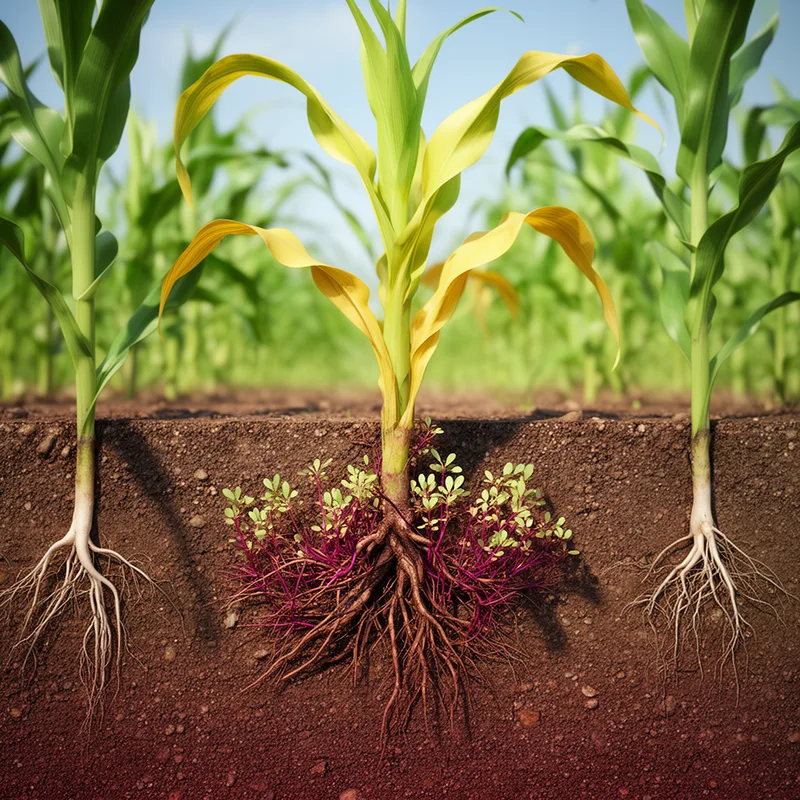
witchweed
- noun
- Indian
- In parts of Africa, witchweed has devastated fields, leading to major reductions in crop yields.
Examples
-
Farmers are struggling with witchweed this season.
-
Witchweed can cause serious damage to corn and sorghum fields.
-
Farmers in some regions struggle to control the spread of witchweed among their crops.
-
The presence of witchweed often leads to lower harvests and economic losses for local communities.
-
The witchweed infestation has spread rapidly.
-
Witchweed is a serious threat to farmers, as it attaches to the roots of witchweed and causes significant damage.
-
Farmers in Asia are increasingly struggling with witchweed, a parasitic plant that harms their crops' growth.
Synonyms

A small plant that grows on crops and takes their water and food, often in Africa

A plant that attaches to other plants' roots and takes food from them
Surface Forms
Morphology
Etymology
Witchweed combines witch and weed because people once blamed strange, harmful plants on 'witches' or bad magic and 'weed' means a wild, unwanted plant. It lives on other plants and takes their food, so it is parasitic. So witchweed is a name that tells you this plant attacks crop roots and can ruin harvests.

