

witchery
 3
9.1
3
9.1

- noun
- /ˈwɪtʃəri/
- Many people believed that the unexplained events in the town were the result of witchery.
- witchery narrative
Examples
-
The villagers were wary of anyone associated with witchery due to past troubles.
-
Order Seasons of Witchery on Amazon.
Blog text (15) -
The ways of witchery still continue.
-
This is why you shouldn't mess around with that witchery.
-
Proof of her witchery.
-
Her work on domestic witchery has been featured in PaganParenting.org and as a national column for Examiner.com.
Blog text (16) -
My newest book "Seasons of Witchery: Celebrating the Sabbats with the Garden Witch" was just released in June 2012.
Blog text (15) -
I hereby accuse this woman of the craft of witchery!
-
There is witchery afoot.
-
The work consists of curing, bewitching, removing the witchery of others, and giving counsel to help people understand the past and future.
Academic text (2003)
Synonyms
 ∞
3.2
∞
3.2
Power that makes impossible things happen, often in stories or rituals
 87
7.0
87
7.0
A practice of using magic and spells to help or harm people
 29
9.2
29
9.2
To use magic to control people or events, often to harm
 20
9.8
20
9.8
Beliefs about secret supernatural powers and practices
 8
9.9
8
9.9
Use of magic to harm or control people
 5
8.6
5
8.6
The practice of using magic, for example learning spells
 4
9.9
4
9.9
A spiritual practice using rituals to try to change things by unseen powers
 3
9.9
3
9.9
The study and practice of magic and secret powers
 1
9.4
1
9.4
Using special words and small actions to make magic happen


 1
8.5
1
8.5
Using words or actions to make magic happen
 1
8.6
1
8.6
Interest in and practice of ceremonies in religion and magic
A practice of doing magic using spells and potions

Using magic to affect people or events
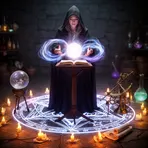
Practices that try to use hidden powers like magic

Rituals that try to call or connect people with gods

Old word for magic that uses spirits
Antonyms


Compounds
How Magical

Surface Forms
Morphology
Etymology
Witchery comes from witch, meaning 'a person who uses magic', plus the ending -ery, which marks 'a practice' or 'place', as in bakery. So witchery means the practice or art of magic, the things witches do.