
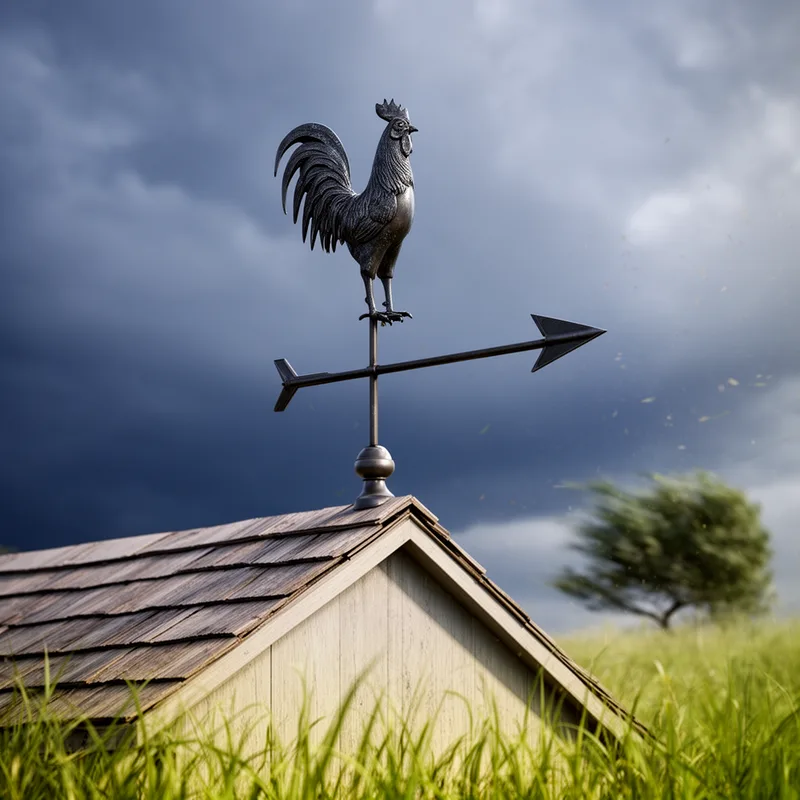
wind vane
- noun
- /wɪnd veɪn/
- Specialized
- During the science lesson, the teacher explained how a wind vane is used to measure wind direction.
Examples
-
The wind vane on top of the barn spins to show the direction of the wind.
-
The wind vane turned sharply as the gusts picked up, clearly indicating the change in wind direction.
-
The bumper-mounted wind vane detected wind direction, a bumper-mounted monitor detected wind velocity, and a magnetic-sensor-equipped bicycle wheel fitted to the rear bumper detected the car's speed.
Academic text (1995)
Synonyms

 3
6.5
3
6.5

A flat metal shape on a roof that turns to show wind direction
 2
5.1
2
5.1
A cloth cone on a pole that shows wind direction and strength, often at airports
 1
5.6
1
5.6
A thing on a roof that turns to show which way the wind blows
 1
3.7
1
3.7
A rod on a roof that turns to show wind direction
 1
8.3
1
8.3
A metal rooster on a roof that shows which way the wind blows

A T-shaped post at an airfield that shows wind direction to pilots

A cloth cone on a pole that shows wind direction and strength

A cloth cone on a pole that shows wind direction and strength
How Clear
- Specialized
 2
5.1
2
5.1
Surface Forms
Morphology
The meaning is directly and transparently derived from 'wind' (air movement) and 'vane' (a rotating plate or indicator): together they describe a device that shows wind direction. This straightforward noun-noun composition follows common compositional patterns (and similar forms exist across languages), so a B1 learner who knows both constituents should be able to infer the meaning.
Etymology
Wind vane gets its name from its parts: the wind moves a flat piece called the vane, and that piece turns to point where the wind comes from. So the name describes its job of showing 'which way the wind is blowing'.