
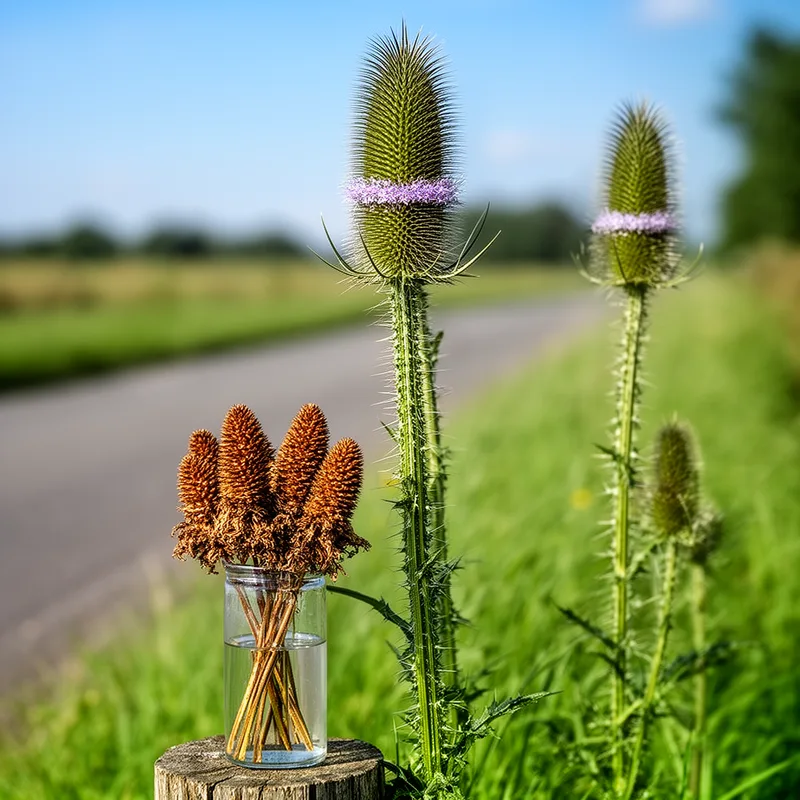
wild teasel
- noun
- /waɪld ˈtiːzəl/
- UK
- The dried heads of the wild teasel are often used in flower arrangements.
Examples
-
We spotted a wild teasel growing by the side of the country road.
-
Invasive in some areas, wild teasel can outcompete native plants.
-
The wild teasel grows in many fields across Europe.
-
Have you seen the wild teasel blooming this spring?
-
The tall wild teasel stands out with its prickly stems and pretty pinkish flowers.
-
In late summer, the wild teasel attracts many bees and butterflies with its blossoms.
-
We found a patch of wild teasel while hiking, its unique structure making it easy to identify.
Synonyms


 1
9.9
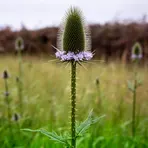
A tall prickly plant with spiny flower heads used to brush wool
 1
9.9
A tall prickly wild plant with spiky flower heads
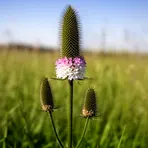
A tall wild plant with prickly seed heads and pink or white flowers

A prickly plant with lilac flowers and spiky dried heads used by weavers to finish wool cloth

A tall prickly plant with cone-shaped flower heads once used to brush wool cloth to make it soft
Surface Forms
Morphology
The phrase is a straightforward modifier+noun composition: 'wild' (growing naturally) modifies 'teasel' (a tall spiny plant), so the meaning 'a teasel that grows in the wild' is directly derivable from the parts. This compositional pattern is common across languages and should be immediately understandable to a B1 learner who knows both words.
Etymology
Wild teasel comes from how people long ago used the spiky heads of the teasel to 'tease' cloth—workers pulled the dried head across wool to lift the soft fibers. So wild simply means it grows in nature, and the name helps you remember a tall, prickly plant with hooked flower heads.