

common teasel
- noun
- UK
- Traditional weavers used dried common teasel heads to finish woolen fabrics.
Examples
-
After blooming, the lilac flowers of common teasel turn into spiky, cone-shaped seed heads.
-
The fields were sprinkled with common teasel, attracting bees and butterflies.
-
The common teasel grows in many fields across Europe.
-
Have you seen a common teasel before?
-
The dried flower heads of common teasel are often used to raise a nap on woolen cloth.
-
In late summer, the common teasel attracts pollinators with its striking lilac flowers.
-
The common teasel is known for its prickly texture and is commonly found in meadows.
Synonyms


 1
9.9
A tall prickly plant with spiny flower heads used to brush wool
 1
9.9
A tall plant with lilac spiky flower heads used to brush wool cloth

A prickly plant with spiny flower heads once used to roughen wool cloth

A tall prickly plant with cone-shaped flower heads once used to brush wool cloth to make it soft

A tall wild plant with spiny flower heads once used to make cloth soft

A prickly wild plant with round flower heads used in dried flower arrangements
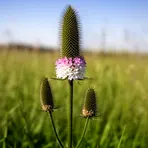
A tall wild plant with prickly seed heads and pink or white flowers
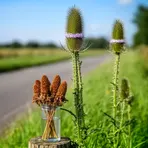
A tall prickly plant with cone-shaped flower heads often dried for decoration
Surface Forms
Morphology
The meaning is fully compositional: 'common' (typical/frequently occurring) simply modifies 'teasel' (a tall spiny plant), yielding 'a commonly occurring species of teasel,' which a learner who knows both words can derive. This is a regular noun + modifier combination found across languages and follows standard English compounding, so it should be immediately understandable to a B1 learner.
Etymology
The noun common teasel comes from how people used the plant: the dried, spiky teasel heads were brushed across wool to 'tease' out tiny fibres and make the cloth soft and fuzzy. So the plant's rough head gave it the name and explains why we used it to finish wool.