

white walnut
- noun
- /waɪt ˈwɔːlnʌt/
- US
- A mature white walnut can produce a plentiful crop of edible nuts each fall.
Examples
-
The wood of the white walnut is prized for its attractive color and workability.
-
The white walnut tree grows in many parts of North America.
-
She used the husks of white walnut to make a natural dye for her fabrics.
-
I love the taste of white walnuts in my salads.
-
The carpenter chose white walnut for the elegant finish of the furniture.
-
Harvesting white walnut nuts can be a rewarding experience for local families.
-
The artist used a stain made from white walnut to achieve a unique color on the wood.
Synonyms

 5
1.0
5
1.0

A large tree that makes hard nuts and has long leaves made of many small parts
 2
2.7
2
2.7
A tree that makes nuts you can eat and strong wood for furniture
 1
6.0
1
6.0
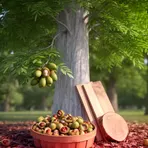
A North American tree that produces edible nuts and useful wood

A North American tree that makes edible nuts and light brown wood used for dye

A North American walnut tree with light brown wood, edible nuts, and bark used to make light brown dye
Surface Forms
Morphology
The noun phrase names a type of walnut characterized by a light (white) coloration, so its meaning is directly composed from 'white' (light-coloured) + 'walnut' (the tree/nut). This adjectival modifier + noun pattern is a simple, cross-linguistically common compound formation, so a B1 learner who knows both words would readily infer the intended meaning.
Etymology
White walnut gets its name from trees with lighter-coloured wood and nuts than other walnuts, where the word white points to the lighter colour and walnut names the tree. People also used the husks to make a 'light brown' dye and ate the nuts, so the name helps you remember a walnut with lighter wood and edible nuts.