

white arsenic


 1
9.3
1
9.3
- noun
- /ˈwaɪt ˈɑːrsənɪk/
- Archaic
- Old rat poisons often contained white arsenic as their main active ingredient.
Examples
-
White arsenic plays a role in the production of certain types of glass.
-
The laboratory handled white arsenic with extreme caution, given its toxic nature.
-
Don't touch white arsenic without protective gear!
-
The factory produces white arsenic for glass manufacturing.
-
Farmers sometimes use white arsenic as a pesticide to control weeds in their crops.
-
The laboratory safely stored the white arsenic in a secured cabinet to prevent accidental exposure.
-
Due to its toxicity, white arsenic is regulated and must be handled with extreme caution.
Synonyms
 6
6.6
6
6.6
A white poisonous powder used as rat poison and to make glass
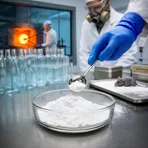
A white poisonous powder used in glass making and in products that kill pests
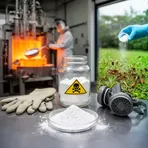
A poisonous white powder that people use to make glass and to kill pests or weeds
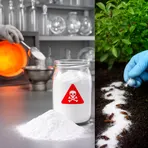
A white poisonous powder used to make glass and kill pests
Surface Forms
Morphology
The noun phrase is directly compositional: 'white' simply describes the color/form of 'arsenic', so a B1 learner who knows both words will understand it refers to a white form of arsenic (arsenic trioxide) and can reasonably infer it is a poisonous substance. The adjective+noun composition is a common, cross-linguistic pattern, making the meaning transparently derivable from the constituents.
Etymology
White arsenic is named for its look: a fine, white powder made from the element arsenic. Because people used this white powder as a 'poison' and in glass making, the name came to mean the toxic chemical arsenic trioxide.