
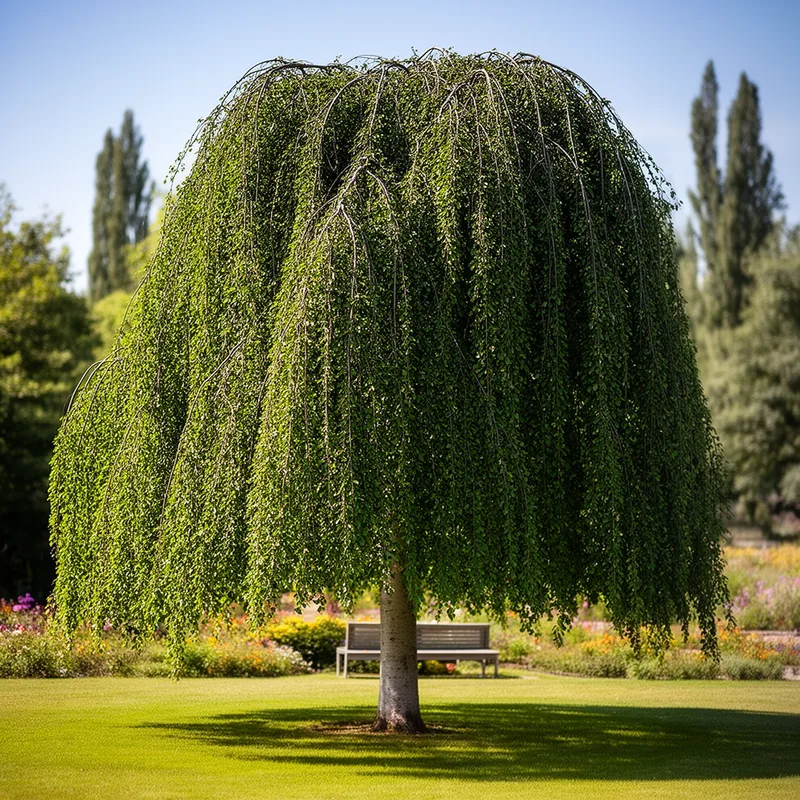
weeping beech
- noun
- /ˈwiːpɪŋ biːtʃ/
- Many weeping beeches can be found in Europe.
Examples
-
The gardens feature a magnificent weeping beech that provides shade in the summer.
-
A weeping beech can grow to impressive heights, making it a striking centerpiece in any park.
-
They planted a young weeping beech along the driveway for its graceful, cascading branches.
-
The weeping beech in the garden is stunning.
-
The park features a stunning weeping beech with long, cascading branches that create a beautiful canopy.
-
During the spring, the weeping beech transforms the garden into a serene oasis with its gracefully hanging leaves.
-
Many homeowners choose to plant a weeping beech in their yards for its unique shape and ornamental appeal.
Synonyms

A beech tree grown in gardens with long drooping branches

A beech tree from Europe with long hanging branches and dense leaves
Surface Forms
Morphology
The phrase is a straightforward adjectival + noun compound: a B1 learner who knows 'weeping' (drooping branches) and 'beech' (a tree) can directly infer it denotes a beech tree with drooping branches. This descriptive, literal composition follows common botanical naming patterns (e.g. 'weeping willow') and is therefore immediately comprehensible from its parts.
Etymology
The name weeping beech comes from the tree's long, drooping branches that hang down like tears. The word weeping shows the hanging shape and beech is the type of tree, so the name now means a beech tree grown for decoration in gardens.

