
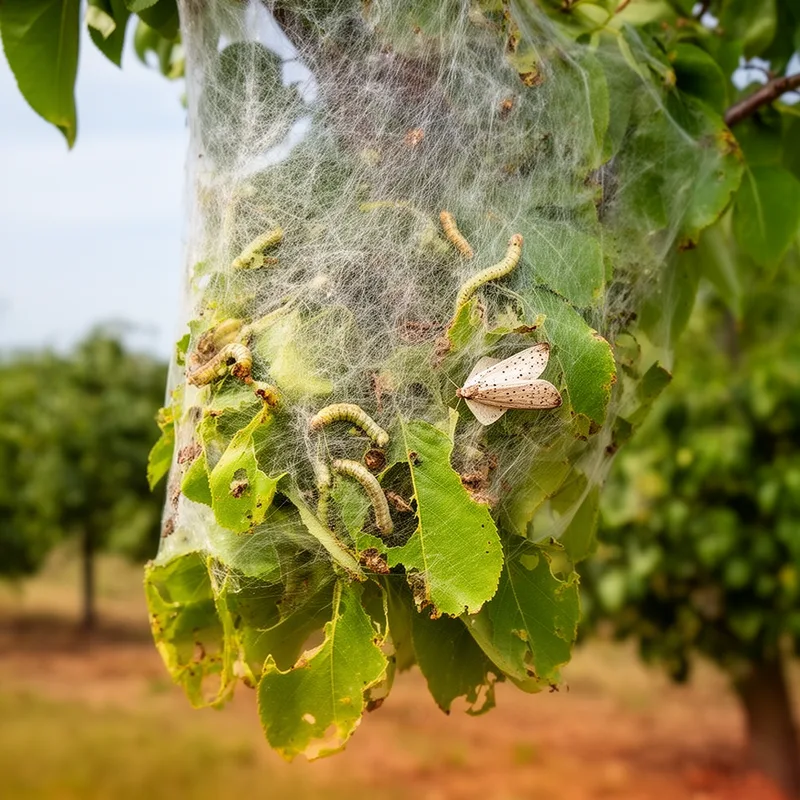
webworm moth
- noun
- /ˈwɛbˌwɜrm mɔθ/
- The webworm moth is known for the distinctive webbing its caterpillars create on branches.
Examples
-
Farmers often battle infestations of webworm moths to protect their crops.
-
The leaves of the trees were covered with webs made by webworm moths in late summer.
-
The webworm moth is often found in gardens.
-
Many webworm moths can damage crops if left unchecked.
-
Farmers often battle infestations of webworm moths to protect their crops.
-
The webworm moth is known for the distinctive webbing its caterpillars create on branches.
-
The leaves of the trees were covered with webs made by webworm moths in late summer.
Synonyms
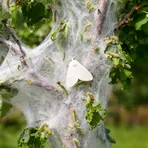
A moth whose caterpillars make silky webs on tree branches
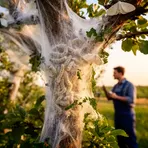
A group of moths whose caterpillars make large silk webs on trees in late summer
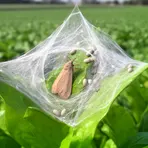
A small moth that makes silk shelters on plants to live and protect its eggs
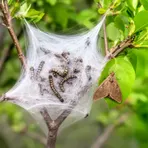
An insect whose caterpillars spin large silk tents in trees
Surface Forms
Morphology
The noun is a straightforward composition of 'webworm' (a caterpillar that creates webs) and 'moth' — i.e. a moth species whose larvae are webworms. This follows a regular noun+noun compounding pattern in English, so a B1 learner who knows both constituents can derive the meaning directly.
Etymology
Webworm moth comes from the caterpillar's habit of making a silk web and living inside it while it eats leaves, so the insect looks like a 'worm' in a web. That's why the name now refers to a moth whose caterpillars spin webs and eat the leaves inside them.

