
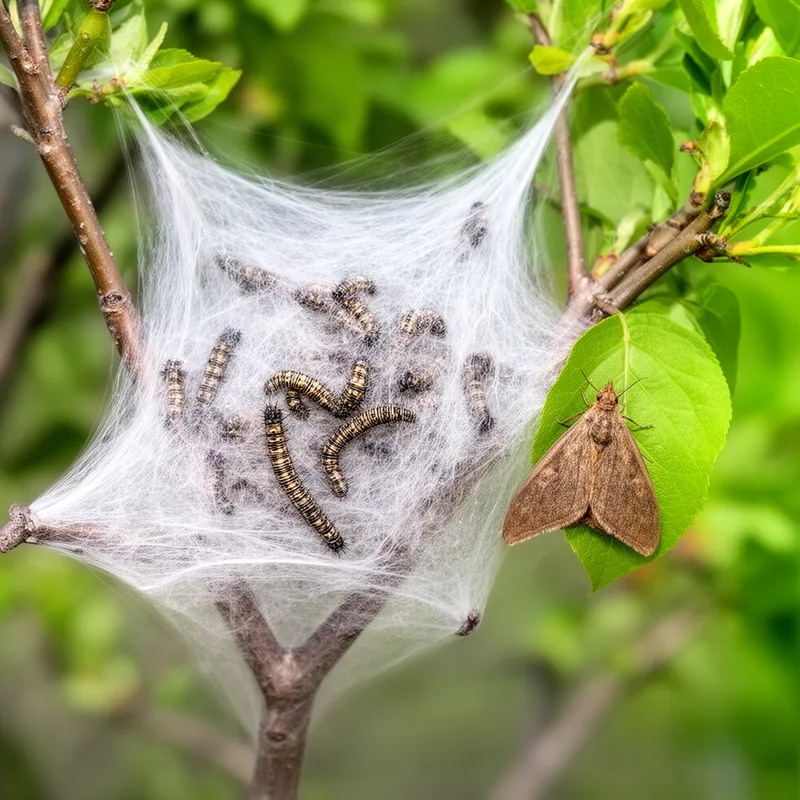
tent-caterpillar moth
- noun
- UK
- The larvae of the tent-caterpillar moth spin large silk webs that resemble tents in the trees.
Examples
-
The tent-caterpillar moth is known for the communal silken tents its larvae construct in trees.
-
Gardeners often remove nests to prevent damage caused by the larvae of the tent-caterpillar moth.
-
In spring, the appearance of the tent-caterpillar moth signals the beginning of the caterpillar infestation.
-
The tent-caterpillar moth is often seen in the spring.
-
Many tent-caterpillar moths can be found in our backyard.
-
During the summer, you might notice a large tent-caterpillar moth hanging around its web in the garden.
-
Gardeners often find the nests of the tent-caterpillar moth in oak trees, as the larvae build extensive silk tents.
Synonyms
A kind of moth whose caterpillars make silk tents in trees
Surface Forms
Morphology
tent-caterpillar + moth
The compound is compositionally built: a 'tent-caterpillar moth' is a moth associated with (or whose larvae are) tent-caterpillars — caterpillars that make tent-like silk webs. Even if 'tent-caterpillar' is not listed as a single dictionary entry, a B1 learner who knows 'tent', 'caterpillar', and 'moth' can reasonably infer this meaning from standard noun‑noun compounding patterns in English.
Etymology
The name tent-caterpillar moth comes from the way its young caterpillars make large silk tents in tree branches, where many of them live together. That's why the name tells you it is a moth whose caterpillars build tent-like nests on trees.

