
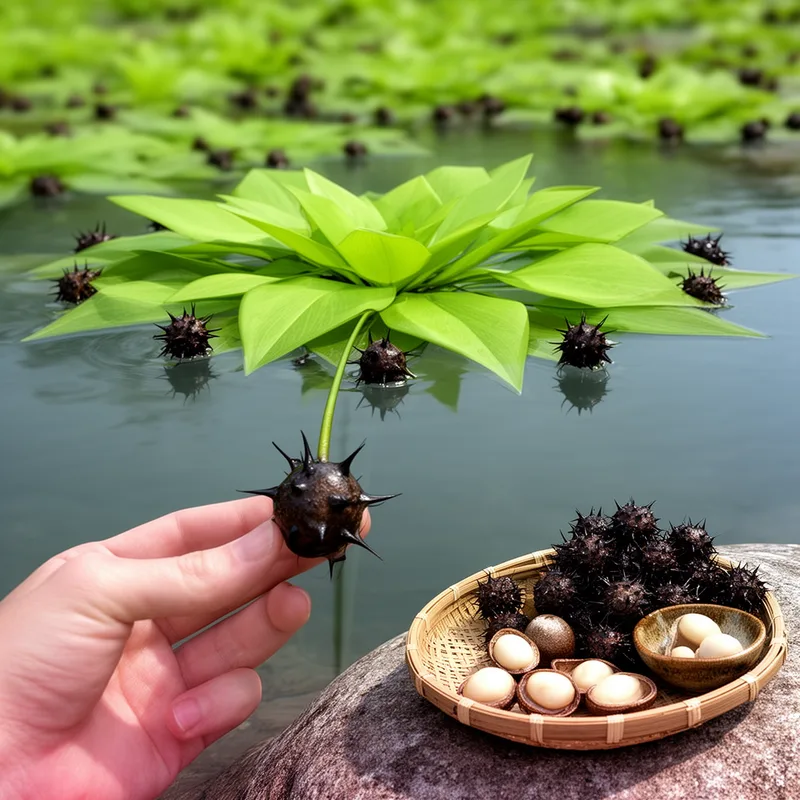
water chestnut plant
- noun
- /ˈwɔːtər ˈʧɛsnət plænt/
- Specialized
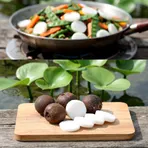
- Chefs use the spiny fruit of the water chestnut plant in a variety of Asian dishes.
Examples
-
The water chestnut plant thrives in slow-moving freshwater lakes and ponds.
-
The invasive spread of the water chestnut plant can disrupt local aquatic ecosystems.
-
The water chestnut plant thrives in shallow waters.
-
Many water chestnut plants grow along the riverbank.
-
Chefs use the spiny fruit of the water chestnut plant in a variety of Asian dishes.
-
The water chestnut plant thrives in slow-moving freshwater lakes and ponds.
-
The invasive spread of the water chestnut plant can disrupt local aquatic ecosystems.
Synonyms
 2
3.0
2
3.0

A plant that grows in water with a crunchy edible part used in Asian cooking
 1
9.9
1
9.9
A small water plant with floating leaves and edible seeds used as food

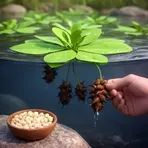
A water plant with hard spiny fruit that people eat

A water plant with floating leaves and hard seeds you can eat

A plant that grows in water and makes a hard horned nut people eat
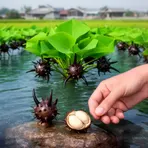
A water plant from Asia with edible seeds and spiky fruit with two sharp points

A water plant that makes a hard fruit with two sharp points eaten for seeds
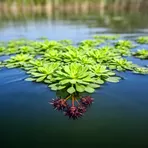
A group of small water plants that includes the water chestnut
Surface Forms
Morphology
The meaning of 'water chestnut plant' is directly compositional: it denotes a plant (plant) that bears chestnut-like fruits (chestnut) and grows in or near water (water). This regular noun–noun compounding follows common English and cross-linguistic patterns, so a B1 learner who knows the constituents would very likely infer the intended botanical meaning.
Etymology
Water chestnut plant may get its name from the plant's hard, spiny fruit that grows in water and looks a bit like a chestnut. So the name simply means a plant with a chestnut that grows in water, which is why it refers to this edible water plant.