
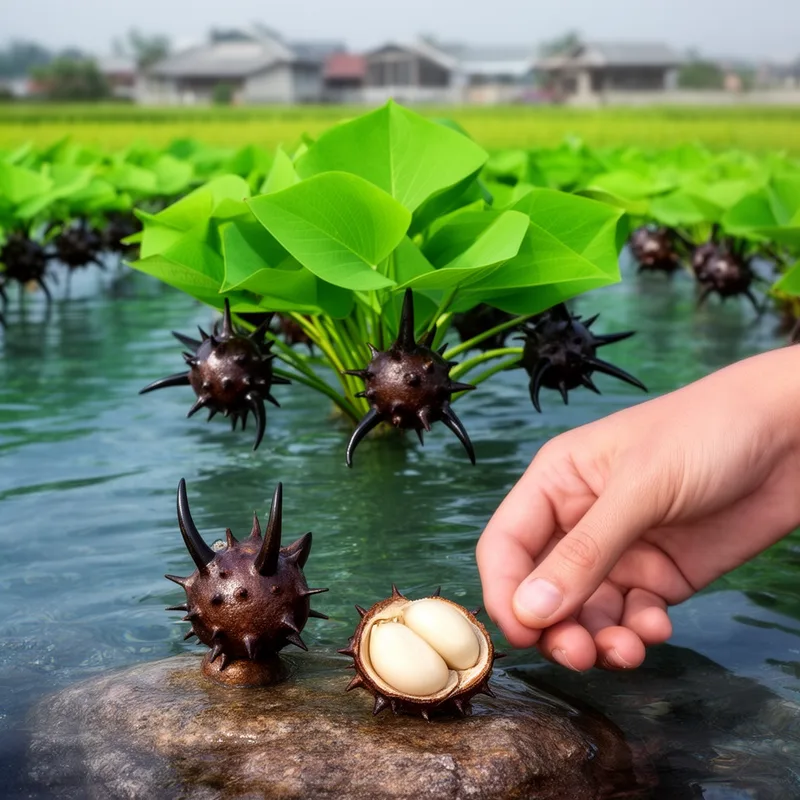
Trapa bicornis
- noun
- Specialized
- The distinctive two-pronged fruits are the hallmark of Trapa bicornis.
Examples
-
The spiny, two-pronged fruits of Trapa bicornis are often harvested for their unique flavor.
-
Botanists distinguish Trapa bicornis from related species by examining the fruit's shape.
-
Trapa bicornis is cultivated in parts of Asia for its edible seeds.
-
The Trapa bicornis thrives in shallow waters.
-
Have you ever tried Trapa bicornis in a salad?
-
Trapa bicornis is commonly found in freshwater ponds and lakes across Asia.
-
Farmers plant Trapa bicornis for its nutritious seeds, which are a popular food source.
Synonyms

A water plant that makes a hard fruit with two sharp points eaten for seeds
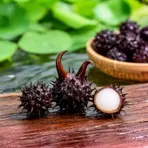
A plant like a water chestnut whose spiny fruit has two prongs
Surface Forms
Morphology
Trapa + bicornis
This is a Latin binomial: 'Trapa' names the aquatic genus and 'bicornis' literally derives from Latin roots meaning 'two-horned/ two-pronged', so the name is descriptively built and would be interpretable by learners who recognise those roots. However 'bicornis' is not an English word and average B1 learners will not reliably parse Latin morphology, so the meaning is only partially accessible and requires extra morphological/etymological knowledge.
Etymology
Trapa bicornis gets its name from the shape of its fruit: the word bicornis means 'two-horned' because the seed has two sharp prongs. So the name points to this 'water chestnut' species whose spiny fruit looks like two small horns.

