

water absorption


 1
3.5
1
3.5
- noun
- /ˈwɔːtər əbˈzɔːrpʃən/
- Specialized
- To evaluate the water absorption, the scientist weighed the material before and after immersing it in water.
- low water absorption
- less water absorption
Examples
-
Salinity in the soil affects the germination process in several ways, such as prevention of water absorption, ionic stress, and reduction of enzyme activities within the seeds.
Academic text (2014) -
"There's no water absorption and, as a result, less warping and decay."
Academic text (1996) -
The water absorption helps reduce your water use.
Blog text (3) -
It's about a new standard method for determining water absorption of stone.
Blog text (16) -
Perlite works particularly well in wick systems because of its water-absorption properties.
Academic text (2009) -
Water absorption greatly reduces their weight-bearing strength.
Academic text (2007) -
Soils in European rotational agriculture using animal power have been found to have 7 times the water absorption of Monsanto's "Zero Til."
Blog text (23) -
Healthy soils provide water absorption, groundwater recharge, food for plants, habitat for decomposers, and sequester carbon.
Blog text (14) -
Its water absorption is low, less than 1 percent of the total weight of the stone, and so in rain or high relative humidity, travertine retains about 80 percent of its compressive strength.
Academic text (2007) -
Instead, they preserved the porous stone with stucco or with travertine or marble cladding, whose water absorption is far less than that of the tuffs.
Academic text (2007)
Synonyms
 21
4.6
21
4.6
A material takes in energy or a substance from another material
 14
3.7
14
3.7
The process of something taking in water
 6
5.1
6
5.1
The body takes in a substance like food or liquid
 3
4.8
3
4.8
The amount of liquid a material soaks up

The taking in of liquid, for example when seeds take in water
How Absorbent

Surface Forms
Morphology
The meaning 'process or amount of water a material takes in' is directly and compositionally derived from 'water' (the substance) + 'absorption' (the process of taking up a substance). This noun+noun compound follows common, cross-linguistic patterns and would be understandable to a B1 learner who knows both constituent words.
Etymology
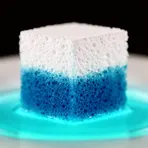
Water absorption is like a simple image: imagine a sponge or a brick put into water that 'soaks up' water into its tiny holes. So, absorption means 'taking in', and the phrase tells how much water a material 'takes in'.