

war correspondent
 8
5.3
8
5.3

- noun
- /wɔr kɔrɪˈspɒndənt/
- Literature
- During the 1930s, he covered the rise of Hitler's Third Reich and became a war correspondent when the fighting began.
Loading YouTube…
Watch on YouTubeYou know, I wanted to be a war correspondent.
- You know, I wanted to be a war correspondent.
- I quickly adapted and became one of the top war correspondents, war journalists of of the decade.
Examples
-
In 1917, she traveled to France to write for the Chicago Daily News as a war correspondent.
Blog text (4) -
I must do this and then I can call myself a war correspondent the rest of my life.
-
You are considered to be one of the greatest war correspondents of all time.
-
Oh, I missed out on a job as war correspondent.
-
The admiral wants you to meet our war correspondents.
-
I quickly adapted and became one of the top war correspondents, war journalists of of the decade.
-
Hmm, it's true, I'm just a burnt-out war correspondent trying to find another story.
-
I'm a war correspondent.
-
Jonathan Foreman, a writer living in London, was formerly the movie critic and a war correspondent for the New York Post.
Academic text (2010) -
As a war correspondent, she reported live from the front lines of the conflict.
Synonyms
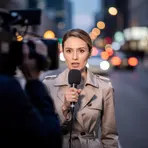 ∞
1.1
∞
1.1
A person who finds and tells news on TV, radio, or newspapers
 942
2.3
942
2.3
A person who reports news for a newspaper, magazine, TV, or website
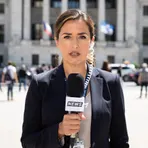 684
4.4
684
4.4
A reporter who gives news from a place or about a particular subject
 22
5.1
22
5.1
A journalist who lives in another country and reports news there for newspapers or TV at home
 21
4.3
21
4.3
A person who takes photos to report news
 13
1.6
13
1.6
A person who reports news on television
 7
2.5
7
2.5
A person who reports news on television
 5
8.4
5
8.4
A person who reports news for newspapers, TV or websites
 2
3.4
2
3.4
A person who reports news on radio or television
 1
2.8
1
2.8
A person who finds and reports news for television, radio, or newspapers


 1
3.3
1
3.3
A person who makes news articles for a newspaper or TV
How Close
- Literature
8
5.3

- Literature
684
4.4
- Literature
∞
1.1
- Literature
12
3.2
Surface Forms
Morphology
The meaning is directly compositional: a 'correspondent' is a journalist assigned to report from a particular domain, and 'war' specifies that domain (reports from war zones). This noun+noun specialization is a common, predictable pattern in English and in many languages, so a B1 learner who knows the constituents would readily infer the MWE meaning.
Etymology
The noun war correspondent comes from journalists who went into war zones and the word correspondent came from 'corresponding' — sending letters and reports back to their newspaper. So, war correspondent now means a journalist who reports from the 'front lines'.