
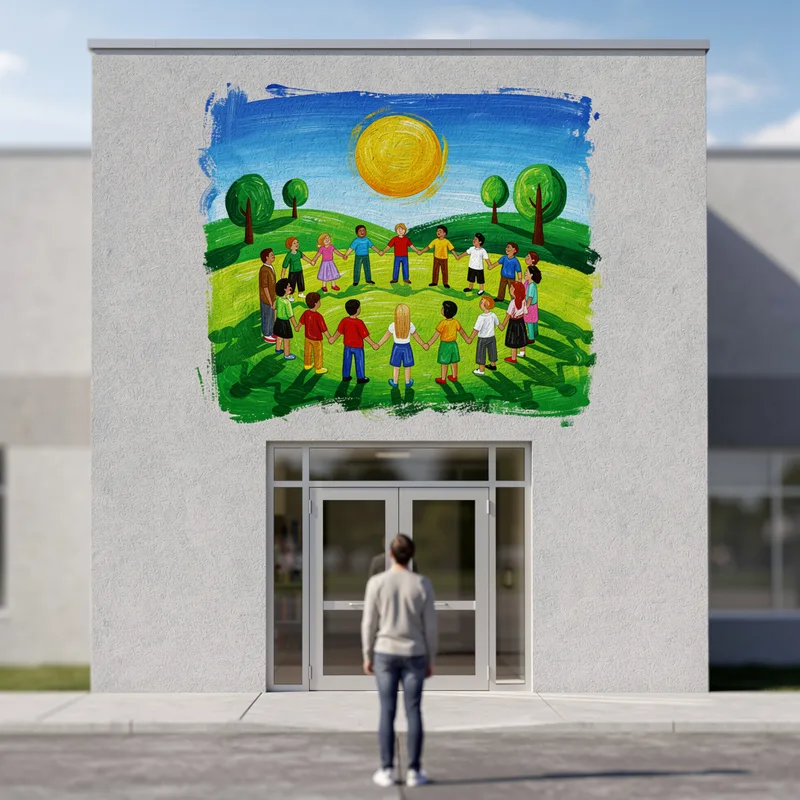
wall painting
 3
2.7
3
2.7

- noun
- /wɔl ˈpeɪntɪŋ/
- During the tour, we admired the ancient wall painting that depicted scenes from daily life.
- Roman wall painting
Examples
-
Local artists collaborated to create a stunning wall painting for the community center.
-
The vibrant wall painting in the dining room brought life to the entire space.
-
From an art historical point of view, the wall paintings are thus the most interesting feature of the new church.
Academic text (1991) -
Many Roman wall paintings survive, like this one.
-
None of the wall paintings have survived into the present, and the practice has been abandoned.
Academic text (1991) -
The intention was that the wall paintings had to be the most noble form of art.
-
This is a wall painting, and the other one is an abstraction.
-
The wall painting at left shows how it was shaken.
Academic text (2009) -
As such, this wall painting is an important survival of a once flourishing Buddhist monastery in China.
-
The spectacular wall paintings from San Bartolo, Guatemala, hint that remarkable finds still lie ahead.
Academic text (2006)
Synonyms
 648
1.0
648
1.0
A picture made with paint on canvas or paper
 99
3.5
99
3.5
A painting made directly on a wall or ceiling
 15
7.7
15
7.7
A painting done on wet plaster on a wall or ceiling
 1
3.2
1
3.2
A large picture painted or printed directly on a wall to decorate it


 1
3.2
1
3.2
A large painted picture on a wall with many bright colors
How Big

Surface Forms
Morphology
The meaning 'a painting executed directly onto a wall surface' is directly and transparently derived from combining 'wall' (vertical surface) with 'painting' (an image made with paint). This simple noun+noun modifier-head composition is cross-linguistically common and follows standard English compounding, so a B1 learner who knows both words will readily understand it.
Etymology
Wall painting comes from the simple image of a painting made on a wall, like ancient murals in houses, churches, or caves that artists painted directly onto the surface. So today 'wall painting' means 'a painting made directly on a wall'.