

fresco
 15
7.7
15
7.7

- noun
- /ˈfrɛskoʊ/
- I trust you recognize The Last Supper, the great fresco by Leonardo da Vinci.
- fresco cycle
- Michelangelo's fresco
- fresco decoration
Loading YouTube…
Watch on YouTubeBut what was contained in the fresco?
- But what was contained in the fresco?
- Unless it turns out he also has great talent for painting frescoes.
- And so they had a lot of these, these things that are basically called frescoes.
- They open those things up and they've got all these frescoes of gorgeous people with whips and people, you know, like, what are they doing?
Examples
-
Ahead, she could see the glow of lamplight falling on a fresco of griffins grappling with lions.
Fiction book (1996) -
You can certainly see the three large format fresco paintings on the end wall.
-
Look at the fresco on the wall over there.
-
And maybe something from even earlier, a fresco or two from the Middle Ages.
Fiction book (1990) -
I can not define it, but the fresco is older than any I saw in France.
-
I look up at Michelangelo's incomparable fresco of the Creation of Man.
-
What was apparently the nursery is decorated with a fresco of children herding ducks.
Academic text (2002) -
Here he is giving a Chapel to the Virgin Mary and on the wall are life-size frescoes of episodes from the life of Christ.
-
The whole Sistine fresco cycle was meant to declare the necessity of the eternally preordained Savior.
Academic text (1992) -
In the old church, we admired a beautiful fresco depicting scenes from the Bible.
Synonyms
 648
1.0
648
1.0
A picture made with paint on canvas or paper
 99
3.5
99
3.5
A painting made directly on a wall or ceiling
 3
2.7
3
2.7
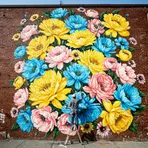
A picture made directly on a wall as decoration
 1
3.2
1
3.2
A large picture painted or printed directly on a wall to decorate it
Surface Forms
Etymology
Fresco comes from the Italian word fresco, which means 'fresh', because painters put paint on wet, 'fresh' plaster so the paint becomes part of the wall. That's why a fresco is a painting made on wet plaster.