

wagon tire
- noun
- Archaic
- The blacksmith heated the wagon tire before placing it onto the wooden wheel.
Examples
-
Early pioneers relied on the strength of a solid wagon tire to survive rough terrain.
-
During the restoration, we had to replace every wagon tire on the old carriage.
-
The wagon tire needs to be replaced.
-
She bought a new wagon tire for her cart.
-
The blacksmith heated the wagon tire before placing it onto the wooden wheel.
-
During the restoration, we had to replace every wagon tire on the old carriage.
-
Early pioneers relied on the strength of a solid wagon tire to survive rough terrain.
Synonyms
 665
1.0
665
1.0

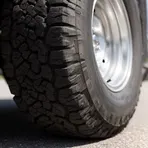
A thick rubber ring that fits around a vehicle wheel and holds air
 1
1.6
1
1.6
A ring of rubber around a wheel that touches the road
Surface Forms
Morphology
The meaning 'a tire for a wagon wheel' is directly and compositionally derived from 'wagon' (a cart) + 'tire' (the wheel covering), so a B1 learner who knows both words will readily infer this referent. Although 'tire' often evokes modern rubber tires, the phrase clearly denotes the wheel's protective band and this straightforward noun + noun combination is cross-linguistically common.
Etymology
Wagon tire was the name for the metal hoop blacksmiths put around a wooden wagon wheel. The blacksmith heated the iron tire so it fit tightly and 'protected' the wood on rough roads, so today the phrase means the metal ring that makes a wagon wheel strong.