
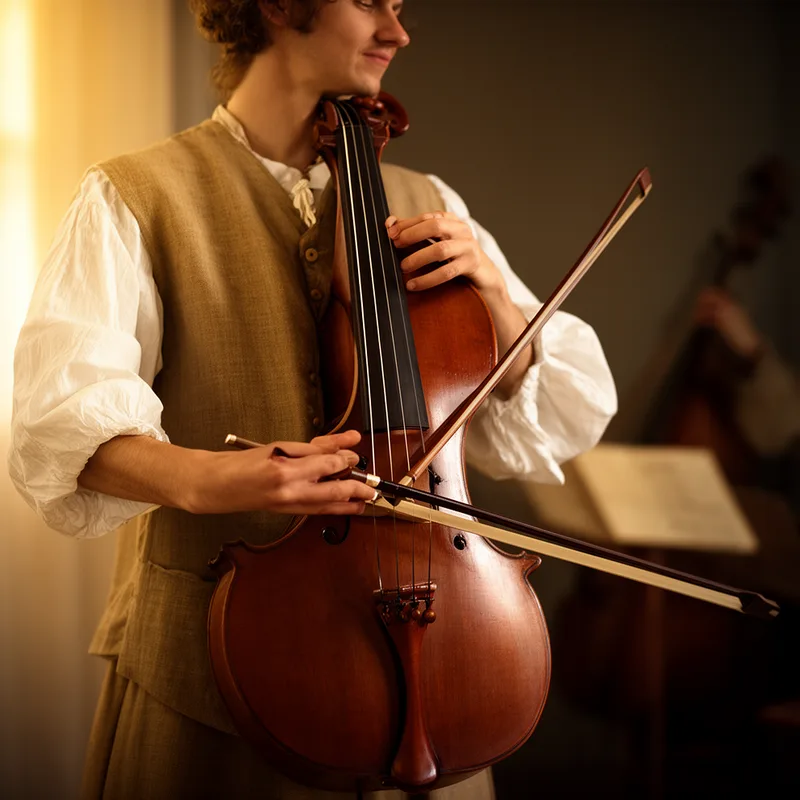
viola da braccio
- noun
- /viˈoʊlə də ˈbrætʃoʊ/
- Archaic
- Unlike the viola da gamba, the viola da braccio is held on the arm when played.
Examples
-
The viola da braccio was popular in Baroque ensembles before the modern viola emerged.
-
He studied the techniques used to play the viola da braccio in early Italian music.
-
The viola da braccio has a rich history in classical music.
-
Many composers wrote for the viola da braccio during the Baroque period.
-
The viola da braccio allows musicians to express the nuances of early music beautifully.
-
In Renaissance orchestras, the viola da braccio played an essential role alongside other strings.
-
The unique sound of the viola da braccio distinguishes it from more modern string instruments.
How Low

Surface Forms
Morphology
viola + da + braccio
If a learner knows the constituents (viola = the instrument, da = Italian ‘of/from’, braccio = Italian ‘arm’), the meaning 'viola of the arm' (an instrument held on the arm) is directly derivable from the parts. Although the phrase is an Italian loan, its compositional structure clearly signals the instrument type and how it is held, so it is transparently interpretable.
Etymology
Viola da braccio comes from Italian and literally means 'viol of the arm'. The words viola and da braccio point to the picture of a musician holding the instrument on their arm, not between the legs like the 'viola da gamba', so the name tells how this old string instrument was played.

