
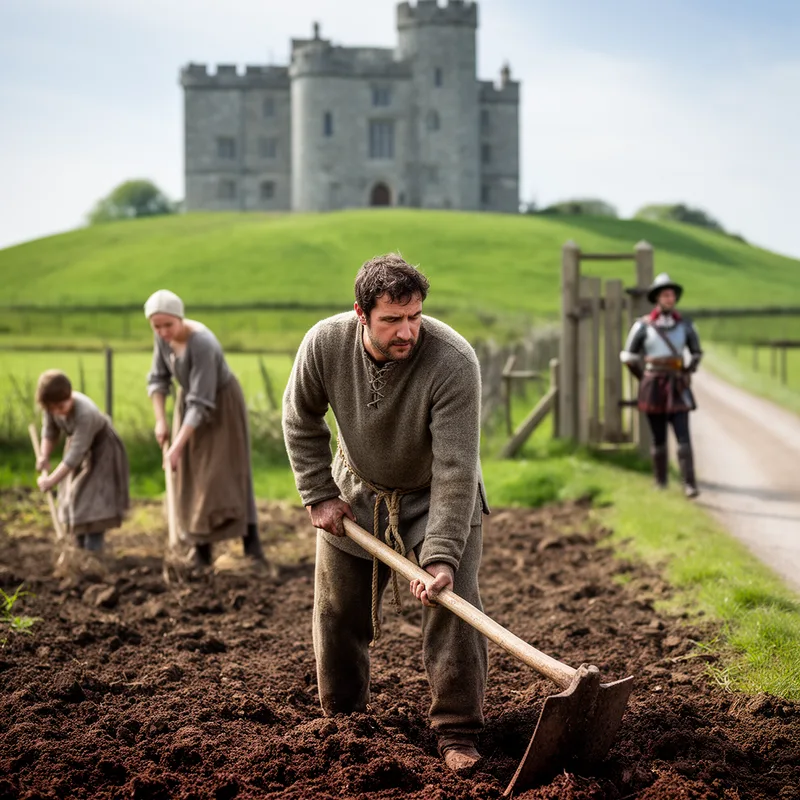
villein


 1
9.9
1
9.9
- noun
- /ˈvɪlɪn/
- Archaic
- The main thing is not to show fear before villeins; it makes them insolent and unmanageable.
Examples
-
Many villeins had to pay taxes to their lord, limiting their freedom and prosperity.
-
I am not his villein nor his hind.
Fiction book (1991) -
The villeins who had come to gawp were well content with all there was to gawp at.
Fiction book (2000) -
Contrast their situations with that of the old villeins, and see then whether our theory of British liberty and the British constitution is true, or that of Blackstone.
Blog text (24) -
D'Cey nodded, picturing villeins down on their knees, weeding with hammers and chisels.
Fiction book (2000) -
I mean, there's every reason to suppose... ...that the game ultimately derives from the wholly unjustified right of the medieval lord to the unpaid labor of villeins and serfs at haymaking and harvest.
-
In the Middle Ages, a villein was often bound to the land and had fewer rights than a freeman.
-
The villeins worked tirelessly in the fields, knowing they were under the lord's control.
Synonyms
 19
9.4
19
9.4
A person in the Middle Ages who must work a lord's land and cannot leave
 1
9.9
1
9.9
A person forced to farm land for a master with no rights
Antonyms


How Free

Surface Forms
Etymology
The word villein comes from the old Latin word villanus, meaning 'person of the villa' or someone who lived on a farm, and the same root is in English village. In the Middle Ages villein came to mean a peasant who was tied to a lord's land and had fewer rights, which explains its historical meaning.