
vexillum
- noun
- /vɛkˈsɪləm/
- Specialized
- PHOTO (COLOR): The top of a ceremonial lance and a relief from a 2nd- or 3rd-century tombstone showing a signa with an eagle and an image of the emperor, and a lance with a vexillum, or flag.
Examples
-
The only other known archaeologically preserved example of a vexillum was found in Egypt sometime in the late nineteenth or early twentieth century.
Academic text (2007) -
For the Emperor Caesar, Antoninus Augustus Pius, on behalf of the vexillum military unit of the Second Legion Traiana Fortis and its auxiliary.
Academic text (2010) -
In ancient Rome, soldiers would proudly carry their vexillum into battle as a symbol of their legion.
-
The museum displayed a stunning replica of a vexillum, showcasing the intricate designs used by Roman armies.
-
During the festival, colorful vexilla adorned the streets, celebrating the history of the ancient world.
Synonyms
A pole with a banner that a Roman unit uses to show who they are and help soldiers gather
Surface Forms
Etymology
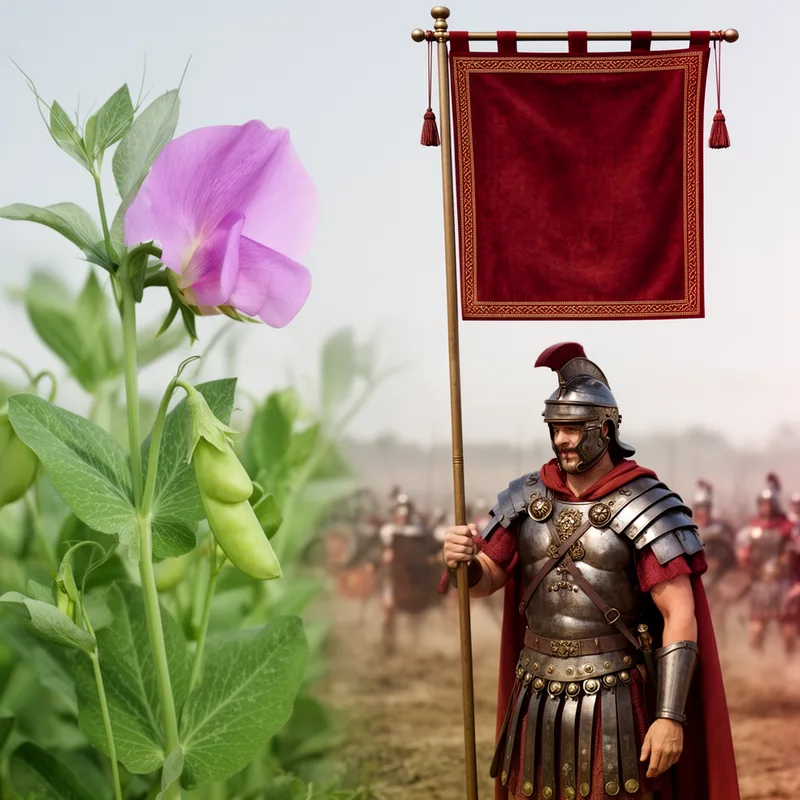
Vexillum comes from the Latin word vexillum, which meant 'flag' or 'standard' carried by Roman soldiers. In botany the large upper petal was named a vexillum because it looks like a small flag, so the same image explains both the banner and the flower petal.

