
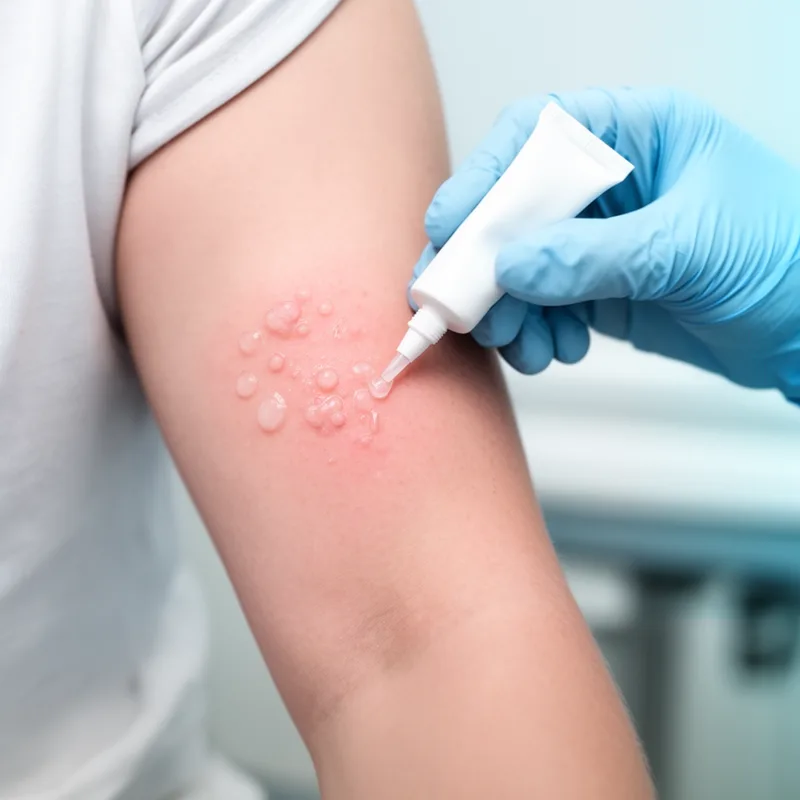
to vesicate
- verb
- /ˈvɛsɪˌkeɪt/
- Specialized
- Some chemical agents can vesicate the skin upon contact.
Examples
-
Prolonged exposure to the sun may vesicate sensitive areas of your body.
-
The sun can vesicate the skin if exposed too long.
-
Doctors observed that the new ointment did not vesicate the patients' skin.
-
He accidentally vesicated his hand while cooking.
-
Prolonged exposure to the sun may vesicate sensitive areas of your body.
-
Some chemical agents can vesicate the skin upon contact.
-
The sun can vesicate the skin if exposed too long.
Synonyms
 15
3.5
15
3.5

To form raised bumps filled with fluid on the skin or a surface

To form small pockets filled with fluid in tissue
Antonyms
Surface Forms
Morphology
vesicate = vesicle (semi-transparent) = vesic + ate
The connection to 'vesicle' is clear, but the verb form 'vesicate' is rare and not immediately transparent to most learners.
Etymology
Vesicate comes from the Latin word vesica, which means 'blister' or 'bladder'. Think of vesicle, a small 'sac' in the body. So, to vesicate is to cause blisters, little sacs, to appear on the skin.