
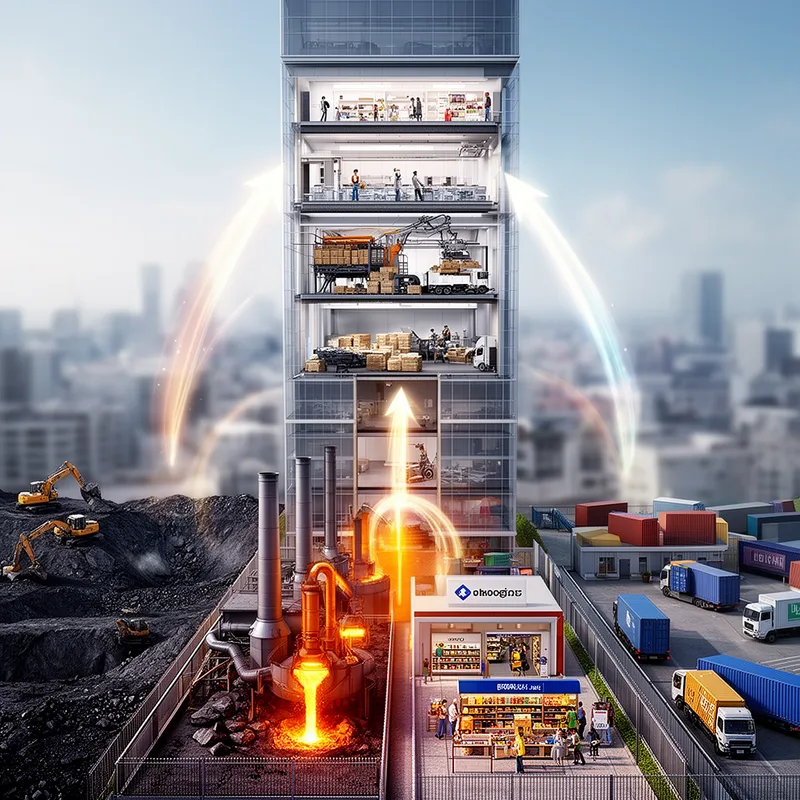
vertical combination
- noun
- /ˈvɜrtɪkəl ˌkɒmbɪˈneɪʃən/
- Specialized
- The steel company undertook a vertical combination by acquiring coal mines and shipping lines.
Examples
-
Through vertical combination, the corporation controlled every step from growing raw materials to selling finished goods.
-
A vertical combination can reduce costs and improve efficiency across the supply chain.
-
A vertical combination can help reduce costs.
-
Companies often pursue a vertical combination strategy.
-
A vertical combination allows a company to manage multiple stages of production, from raw materials to distribution.
-
The merger resulted in a vertical combination that streamlined operations and cut expenses at every level.
-
By forming a vertical combination, the firm was able to control the supply chain more effectively.
Synonyms

 1
6.8
1
6.8

A company that owns several production steps from raw materials to selling the product
How Integrated

Surface Forms
Morphology
The phrase is largely compositional: 'vertical' (across levels or stages) combined with 'combination' (joining) gives a general sense of joining entities at different levels. However, the precise business sense—merging firms that handle different production and distribution stages—is somewhat technical and depends on a non-spatial, industry-specific reading of 'vertical', so a B1 learner knowing only basic word meanings may not fully infer it.
Etymology
Vertical combination creates the image of different business steps stacked on top of each other: vertical like floors in a building and combination meaning brought together. So it means joining companies that handle different 'stages' of making and selling a product into one firm, often to save money and work better.