
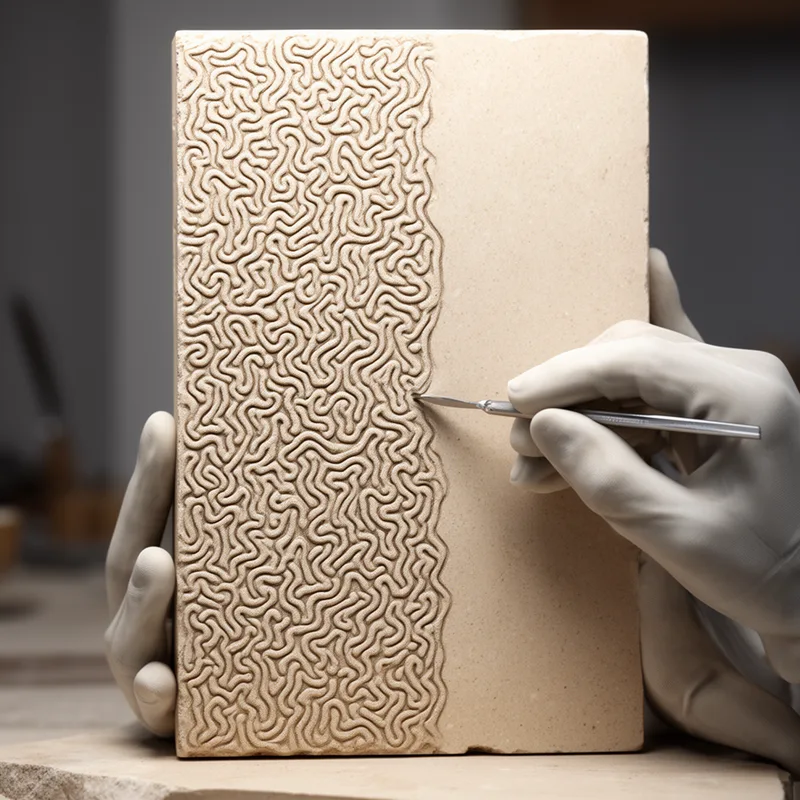
to vermiculate
- verb
- /vɜrˈmɪkjʊˌleɪt/
- Specialized
- The artist chose to vermiculate the vase, giving it an intricate, wavy pattern.
Examples
-
She loves to vermiculate her pottery with unique designs.
-
Ancient craftsmen would often vermiculate stone surfaces as a decorative technique.
-
She watched the baker vermiculate the top of the pie with delicate swirls of icing.
-
The artist vermiculates the canvas with intricate lines.
-
The artist vermiculated the canvas with fine, swirling lines that brought the painting to life.
-
The architectural design featured vermiculated patterns that mimicked the natural trails of worms.
-
As she decorated the cake, she vermiculated the frosting to give it an elegant, textured finish.
How Winding


Surface Forms
Morphology
vermiculate = vermicul + ate
The combining form 'vermicul-' is not a recognizable standalone English base for most learners (it comes from Latin for 'worm'), and although '-ate' is a productive suffix, the overall specialized meaning is not transparently derivable by an average B1 learner.
Etymology
Vermiculate comes from the Latin vermis 'worm' and the little form vermiculus 'little worm'. So to vermiculate is to make winding, wormlike lines as decoration, like drawing tiny worm tracks across a surface.