
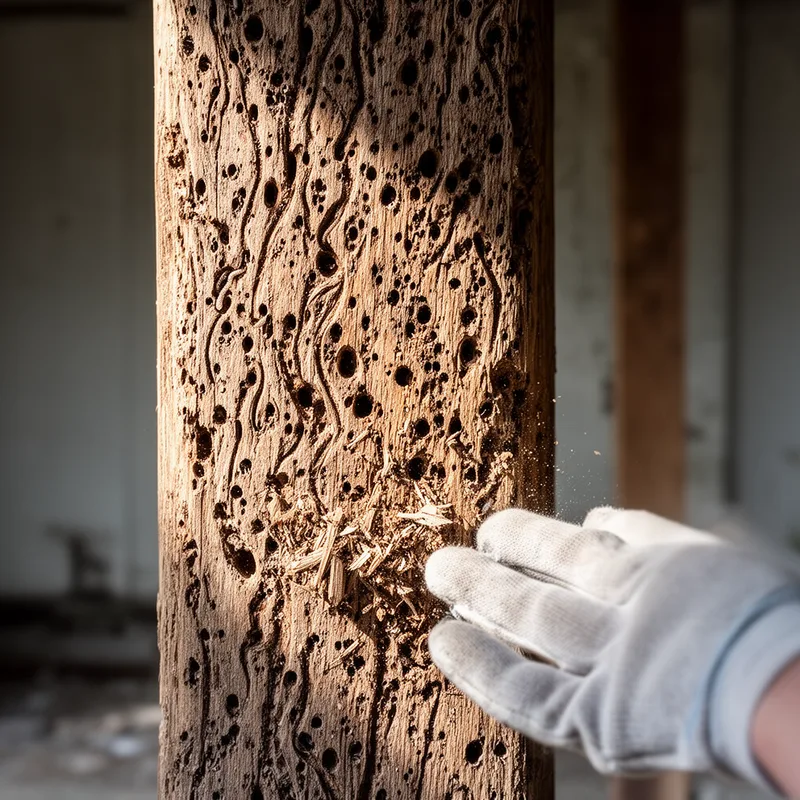
vermiculate
- adjective
- /ˈvɜrmɪkjʊlɪt/
- She examined the painting's frame, noting its vermiculate appearance and tiny, twisting holes.
Examples
-
The old wooden beams were so vermiculate that they crumbled at the touch.
-
The archaeologist found vermiculate bones in the ancient burial site, riddled with worm tracks.
-
This wood is vermiculate.
-
Look at this vermiculate stone!
-
The ancient manuscript showed a vermiculate pattern, as if it had been nibbled by insects over the years.
-
The artist intentionally used a vermiculate technique to create a unique texture on the sculpture.
-
After inspecting the old furniture, I noticed a vermiculate look to the wood, filled with small holes.
Synonyms
 2
6.0
2
6.0

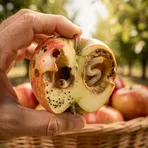
Having holes or soft parts because worms have eaten it
 1
6.2
1
6.2
Full of holes that worms or insects make

Infested with worms or small pests that harm things
How Damaged


Surface Forms
Morphology
vermiculate = vermicul + ate
Although historically built from a root meaning 'worm' plus '-ate', the root form 'vermicul-' is not transparently linked to the common English word 'worm', so learners are unlikely to infer the meaning 'infested or damaged by worms' from the parts alone.
Etymology
Vermiculate comes from the Latin vermis 'worm' and vermiculus 'little worm'. It can also mean 'eaten by worms' or full of tiny, twisting holes and marks, so a vermiculate object looks as if worms have left many small tracks or chewed places.