
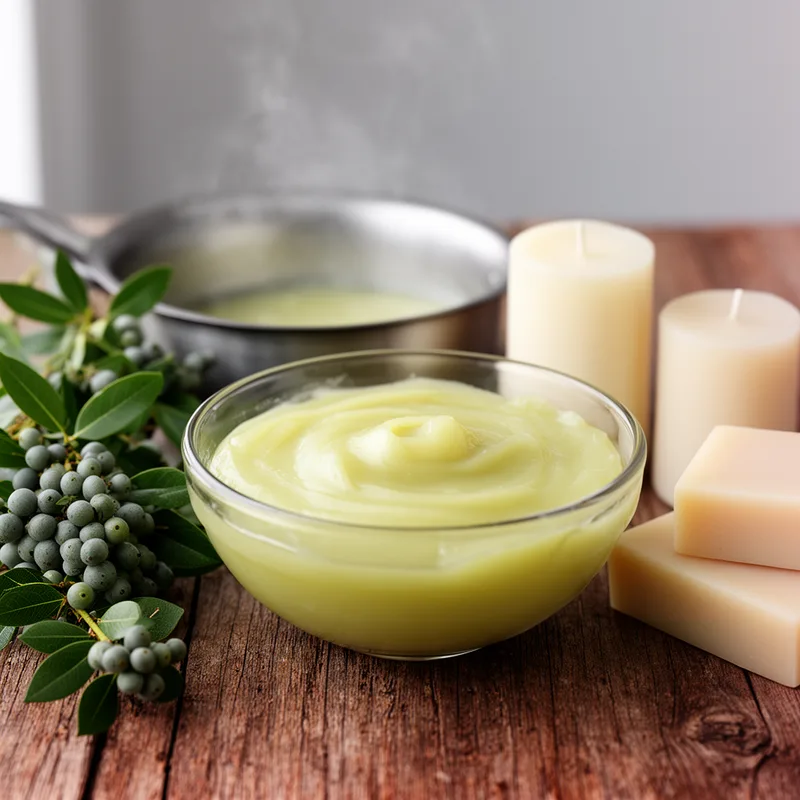
vegetable tallow
- noun
- /ˈvɛdʒtəbl ˈtæloʊ/
- Harvesting bayberry for vegetable tallow was a common practice in colonial America.
Examples
-
The candles were made from vegetable tallow instead of beeswax.
-
The candle was made from vegetable tallow.
-
Some soap manufacturers prefer vegetable tallow over animal fat for ethical reasons.
-
Many people prefer vegetable tallow for making soap.
-
Vegetable tallow, often used in vegan cooking, provides a plant-based alternative to butter.
-
Many candle makers prefer vegetable tallow because it burns cleanly and adds a nice texture to their products.
-
Chefs sometimes use vegetable tallow in recipes that require a rich, creamy consistency without any animal products.
Synonyms

A green scented wax from bayberry berries used for making candles

A green, fragrant material made from the bayberry plant used to make candles
A yellowish wax from the berries of some sumac trees used in polishes and candles
A firm, oily material from plants used in polishes and cosmetics
Surface Forms
Morphology
vegetable + tallow
The phrase is a straightforward noun–noun compound where 'vegetable' (plant-based) modifies 'tallow' (rendered fat/waxy substance), so the meaning 'plant-derived/waxy fat used like animal tallow' is directly derivable from the parts. This compositional pattern is common cross-linguistically and would be understandable to a B1 learner who knows both constituent words.
Etymology
The noun vegetable tallow comes from an old craft: people boiled bayberries and other plants to get a waxy fat. This plant fat (the vegetable part) was used as tallow to make 'candles' and 'soap', so today the term means a plant fat 'used like animal tallow'.

