

vacuum flask
- noun
- /ˈvæk.juːm flæsk/
- The scientist used a vacuum flask to store liquid helium at a stable temperature.
Examples
-
I poured my hot coffee into a vacuum flask to keep it warm during the hike.
-
Its metal surface scorched and discolored, it stands upright in a vacuum flask, as if saluting.
Fiction book (1991) -
And then indeed how you would contain the filament, is it in a vacuum flask or is it in a, a gas or whatever.
-
So in this box is some hot water, and in this vacuum flask is about a litre of liquid nitrogen.
-
There is much confusion about thermal conductivity throughout this thread, and I think much of it comes from people's everyday experience with vacuum flasks, in which they understand that reducing the pressure in the cavity between the walls.
Blog text (18) -
To ensure her soup stayed hot, she packed it in a vacuum flask for the picnic.
Synonyms


 1
2.5
1
2.5
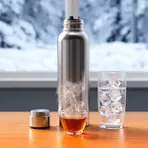
A bottle that keeps drinks hot or cold for a long time

A container that keeps drinks hot or cold for a long time

A container with two walls and empty space between them that keeps drinks hot or cold
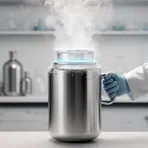
A container that keeps very cold liquids like liquid nitrogen from warming
How Insulating

Surface Forms
Morphology
The meaning is directly derivable from combining 'vacuum' (an empty space) with 'flask' (a container): a B1 learner who knows both words can infer it is a container that uses a vacuum to insulate liquids. This noun+noun compound follows a transparent compositional pattern common across languages, so the sense is predictable without prior exposure.
Etymology
The noun vacuum flask comes from a simple picture: a glass flask inside another, with a space that has almost no air called a vacuum between the walls. So, that empty space stops heat moving, and the vacuum flask keeps liquids 'hot' or 'cold' for a long time.