
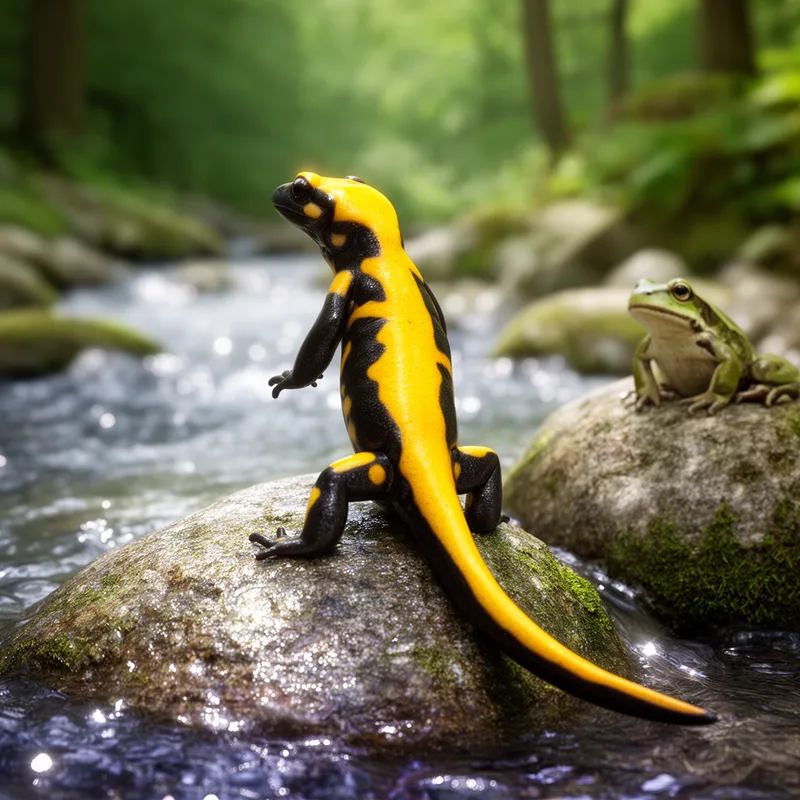
urodele
- noun
- /ˈjʊrəˌdiːl/
- Specialized
- The urodele is known for its remarkable ability to regenerate lost limbs, which is seen in species like salamanders.
- urodele amphibian
Examples
-
Urodele amphibians may not be such unique organisms, and we may be on the way to a better understanding of how to mimic some of their special abilities.
Academic text (2018) -
Given these findings, it is evident that chick limb buds, like urodele amphibians, have the ability to induce the intercalary response.
Academic text (2018) -
Application of ectopic Fgf2 + Fgf8 in a skin wound is sufficient to induce a blastema in urodele amphibians 18.
Academic text (2018) -
Scientists study urodeles because their life cycle and regenerative traits provide insights into amphibian biology.
-
Many children are fascinated by urodeles, especially newts, which often resemble miniature lizards.
Synonyms
An amphibian like a salamander or newt that has a tail
Surface Forms
Morphology
urodele = Urodela (opaque) = uro + dela
Formed from New Latin/Greek combining elements (uro- + -dela) used in scientific taxonomy, which are not recognizable or productive morphemes for average learners.
Etymology
Urodele comes from the Greek parts oura ('tail') and delos ('visible'), so it literally means 'visible tail'. That's why urodeles are amphibians, like newts and salamanders, that keep their tail for life.

