

up the river without a paddle


 1
9.9
1
9.9
- idiom
- Informal
- He lost all his money gambling and now he's up the river without a paddle.
Examples
-
After the car broke down in the middle of nowhere, they knew they were up the river without a paddle.
-
If we can't find the key, we're up the river without a paddle.
-
I'm up the river without a paddle!
-
You're up the river without a paddle now.
-
If we miss our flight, we'll be up the river without a paddle and stranded in a foreign city.
-
When the project failed, the team realized they were up the river without a paddle without any backup plan.
-
After losing his job and facing unexpected expenses, he felt up the river without a paddle.
Synonyms
 15
6.3
15
6.3
Someone has no help or basic things in a difficult situation
 15
6.5
15
6.5
Unable to continue because progress has stopped
 15
7.7
15
7.7
Very close to failure or defeat with little chance to recover
 8
8.2
8
8.2
Left without help at an important time
 6
8.5
6
8.5
In trouble and not able to fix the situation
 3
9.4
3
9.4
In a difficult situation with no easy way out
 3
4.0
3
4.0
Unable to leave a place because no help or transport is available
 2
7.4
2
7.4
A situation of very great trouble and urgent need with no easy way out
 2
8.6
2
8.6
To be in a difficult situation with no easy way out
 1
9.9
1
9.9
A very bad situation with no way to fix it

Be in serious trouble with no way to get out

A plan or project that goes badly and fails completely

A hard situation where no choice seems good
Antonyms

How Difficult
133
2.7

- Informal
1
9.9
- Informal
6
8.5
∞
2.9
Surface Forms
Morphology
up + the + river + without + a + paddle
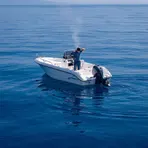
The meaning is directly inferable from the literal image: being 'up the river' (i.e. in a boat or watercourse) 'without a paddle' implies you cannot steer or escape, so it naturally generalizes to being in a difficult or hopeless situation. This uses common, concrete vocabulary and a clear physical scenario, so a B1 learner who knows the parts can plausibly deduce the intended meaning.
Etymology
Up the river without a paddle comes from the clear image of being in a small boat that the river carries while you have no paddle to steer or row. If you cannot steer or row you are stuck and helpless, so the phrase means 'in a difficult or hopeless situation'.