

unprovided for
- adjective
- Many families are unprovided for in times of crisis.
Examples
-
Many elderly people are left unprovided for after retirement.
-
The sudden storm caught the hikers unprovided for the harsh weather.
-
After losing his job, he found himself completely unprovided for in the city.
-
The unprovided for children faced numerous hardships.
-
The charity aims to help families that are unprovided for due to job loss and other financial hardships.
-
Without proper funding, many students in the program are left unprovided for when it comes to essential supplies.
-
During the economic crisis, many people found themselves unprovided for and struggling to meet their basic needs.
Synonyms
 50
6.2
50
6.2

People or places that have very little money and few things they need
 27
5.1
27
5.1
Does not have money to start or run a project
 8
5.0
8
5.0
Not having enough money to run a school or project
 2
7.1
2
7.1
Not getting money help from outside, especially from the government
 1
6.8
1
6.8
To live with only enough money to pay for basic needs and no savings
 1
3.9
1
3.9
Not held up by anything and likely to fall


 1
5.1
1
5.1
Not having enough money to do the work properly

Not having the supplies or preparation needed for a situation

A project that has no money to pay for it

Not given money to pay for it

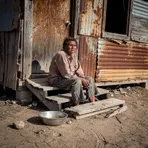
A person who has little money and cannot buy basic things

Having very few natural things like water or minerals
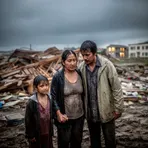
A person or group who does not have shelter and the help they need

A person who acts alone without anyone assisting them
Antonyms

How Supported

Surface Forms
Morphology
The phrase is compositionally built from the verb phrase 'provide for' (to supply or support) with a negating prefix 'un-', so a learner who knows 'provide/provided' and 'for' can readily infer 'not provided for' = 'not having necessary support or resources'. This pattern (verb + for meaning 'support') and simple negation is cross-linguistically common, making the MWE transparently interpretable to a B1 learner.
Etymology
The adjective unprovided for paints a simple picture: someone not provided, meaning 'given', for a journey or a home, like a traveller with no food or shelter. So, it now means 'not having the help or resources needed'.