

unmusical


 1
5.3
1
5.3
- adjective
- /ʌnˈmjuːzɪkəl/
- Whether Castells is hostile to religion or simply "religiously unmusical" need not concern us here.
Examples
-
In the early days, the weaknesses of the Suzuki method were seen by skeptics to be the inability of students to read music and their unmusical, robot-like playing.
Academic text (1996) -
For a man so seemingly unmusical, he sang them surprisingly well.
Academic text (2000) -
Although she loves to dance, she admits she is unmusical and cannot carry a tune.
-
Despite enjoying live performances, he felt unmusical when it came to singing along.
-
His friends often joked that he was unmusical, as he struggled to keep rhythm during karaoke nights.
Synonyms
 1
7.0
1
7.0
Unable to hear or sing the right notes in music
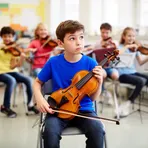
A person who is not interested in or good at music

Not able to sing, play, keep a steady rhythm, or enjoy music
Antonyms

How Musical

Surface Forms
Morphology
Etymology
Unmusical starts with un- 'not' and the rest is music, a word that comes from an old Greek word for 'songs and art'. So unmusical can mean 'not having skill or interest in music', for example someone who cannot sing or does not enjoy playing instruments.