
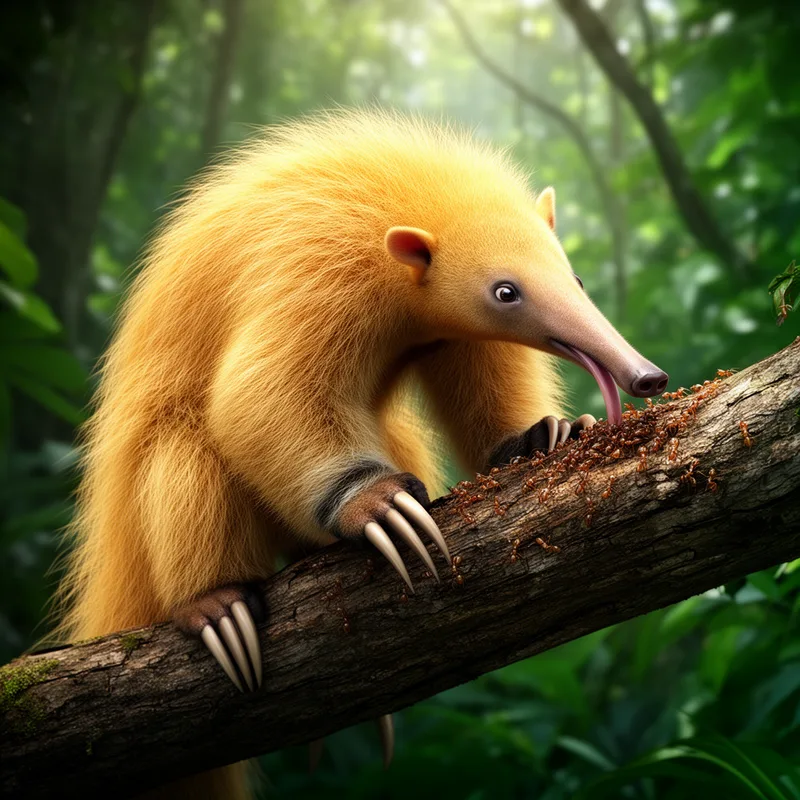
two-toed anteater
- noun
- /ˈtuːˌtoʊd ˈæntiˌtɚ/
- The two-toed anteater uses its long tongue to feed on ants and termites.
Examples
-
The two-toed anteater spends much of its time curled up in trees, hidden among the leaves.
-
Scientists recently discovered a new population of two-toed anteaters in the Amazon rainforest.
-
Look at that two-toed anteater!
-
The two-toed anteater is a fascinating creature.
-
Scientists recently discovered a new population of two-toed anteaters in the Amazon rainforest.
-
The two-toed anteater uses its long tongue to feed on ants and termites.
-
The two-toed anteater spends much of its time curled up in trees, hidden among the leaves.
Synonyms
A small South American anteater that lives in trees with long silky fur and no teeth

A small animal that lives in trees in Central and South America with long golden fur and no teeth

Small anteaters that live in trees in Central and South America and eat ants
Surface Forms
Morphology
The phrase is fully compositional: 'two-toed' means having two toes and 'anteater' names the animal, so a learner who knows both constituents can infer an anteater with two toes. This kind of numeral + anatomical descriptor + animal noun is cross-linguistically common and follows regular English noun-compounding patterns, making it readily understandable at B1.
Etymology
Two-toed anteater gets its name from a clear image: an anteater with only two-toed front feet, where you can see two big 'toes' or claws. That's why the name tells you what kind of anteater it is—a small animal from South America that uses those claws and a long tongue to eat 'ants' and 'termites'.

