

turpentine camphor weed
- noun
- US
- The turpentine camphor weed filled the air with a pungent, medicinal aroma along the hiking trail.
Examples
-
Botanists identified several specimens of turpentine camphor weed flourishing in the dry soils of New Mexico.
-
Local herbalists sometimes use turpentine camphor weed in traditional remedies for its fragrant oils.
-
The turpentine camphor weed grows abundantly in California.
-
Look at that turpentine camphor weed!
-
Botanists identified several specimens of turpentine camphor weed flourishing in the dry soils of New Mexico.
-
Local herbalists sometimes use turpentine camphor weed in traditional remedies for its fragrant oils.
-
The turpentine camphor weed filled the air with a pungent, medicinal aroma along the hiking trail.
Synonyms
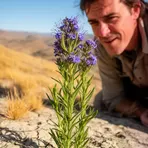
A plant from the western United States with a strong smell called vinegar weed or turpentine weed

A plant that smells strongly like vinegar and grows wild in the western United States

A low, sticky plant with narrow leaves and small yellow flower heads that smells of resin

A small plant with camphor-smelling leaves and bright yellow flowers that grows in the western United States
Surface Forms
Morphology
The phrase is a descriptive compound formed from nouns that label substances and a plant (turpentine + camphor + weed), so a learner who knows the constituents can infer it refers to a wild plant with turpentine-/camphor-like aromatic, resinous qualities. This follows ordinary compositional naming patterns for plants and is cross-linguistically common, so the overall meaning is directly derivable from the parts.
Etymology
Turpentine camphor weed is named for the plant's strong, oily smell: its leaves give a sharp scent like turpentine and camphor, and the plant often grows as a common weed in dry places. That's why the name shows it is a plant with a powerful 'medicinal' 'scent'.

