
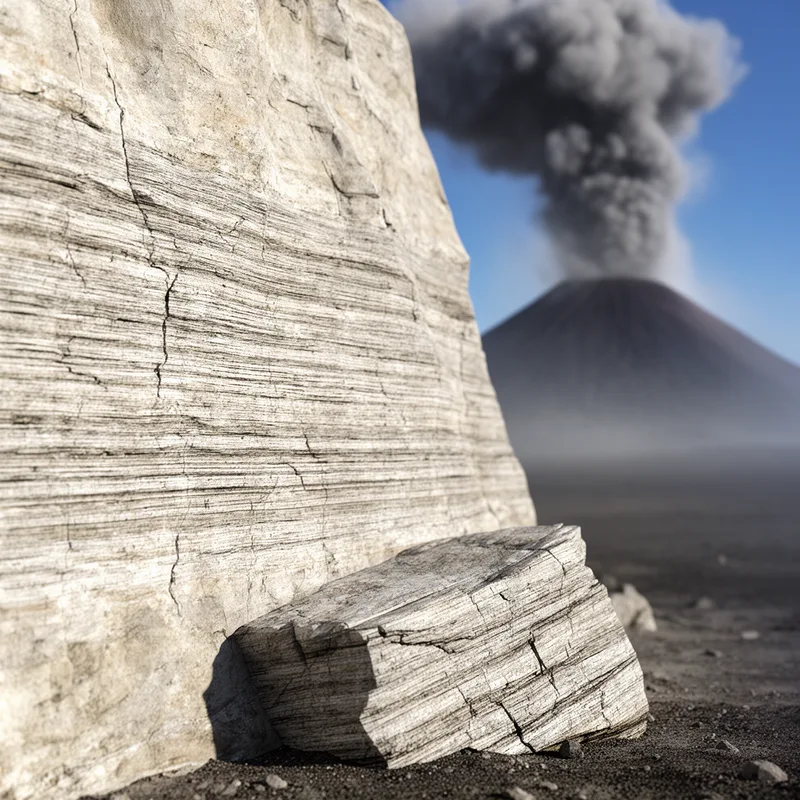
tuff
 2
9.8
2
9.8

- noun
- /tʌf/
- Specialized
- To prevent further deterioration and eventual corrosion, the tuff building stones should be placed under protective cover, as Vitruvius recommended more than 2,000 years ago.
- volcanic tuff
- tuff masonry
- soft tuff
Examples
-
A stroll through modern Rome reveals many ancient columns constructed of tuffs, some of which still retain protective cladding or semipermeable coatings of stucco.
Academic text (2007) -
Moreover, these tuffs are denser, take in less water, and have greater elasticity than brittle Tufo Giallo and Tufo Lionato.
Academic text (2007) -
Both the pumice and the cavities contribute to the tuff's vulnerability.
Academic text (2007) -
Travertine both reinforced and protected soft-tuff masonry in Roman architecture.
Academic text (2007) -
Rome stands on thick deposits of tuff, a soft igneous rock laid down by a prehistoric eruptions.
-
The builders of ancient Rome clad soft, porous volcanic tuff with harder travertine and marble, creating enduring, majestic structures out of local materials.
Academic text (2007) -
The ancient city is built on layers of tuff, a rock formed from compacted volcanic ash.
-
The quarries around the town produce large amounts of tuff, which is prized for its insulation properties.
-
At the mesa top, look right across Frijoles Canyon's pinkish cliffs of tuff, a soft rock formed from volcanic ash.
Synonyms
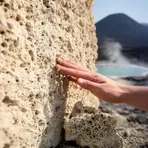
A soft rock full of small holes made when volcanic ash is pressed together
Surface Forms
Etymology
The word tuff comes from the Italian word tufo, meaning 'soft volcanic stone'. So, tuff is the rock formed when volcanic ash is pressed together and hardens.