
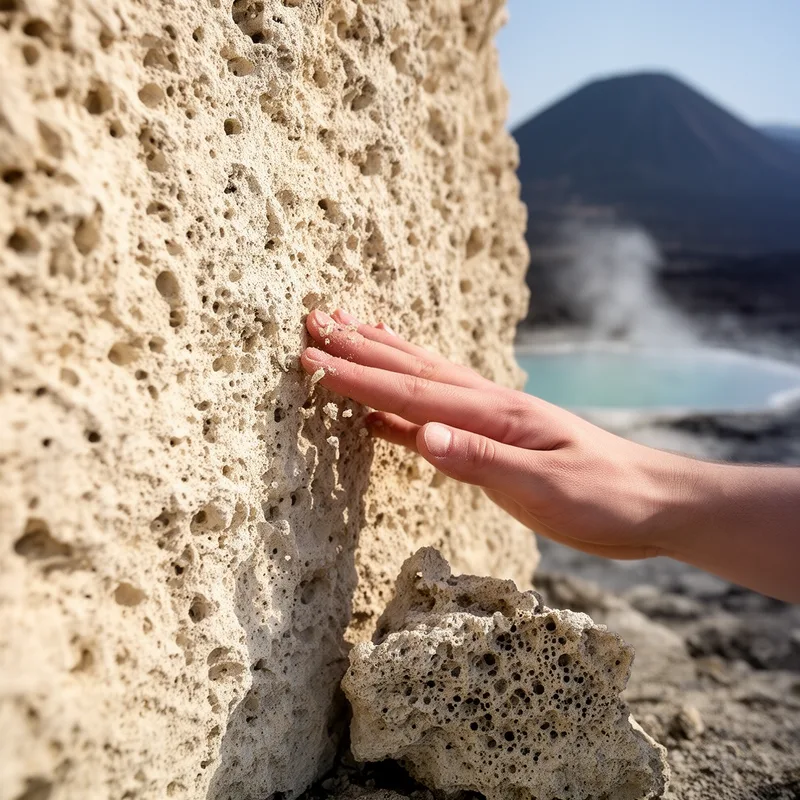
tufa
- noun
- /ˈtuːfə/
- Specialized
- This countryside was ideal for constructing large galleries and burial niches because it is underlain by tufa, a volcanic stone that is soft when it is first dug, but hardens over time as it is exposed to air.
Examples
-
They dug gargantuan monasteries and churches into the tufa bluffs, excavating apses and altars, columns and naves.
Fiction book (2002) -
At the time, Cataldi drilled several holes and sent a camera down into the tufa hill.
Academic text (2010) -
And later that week, when I visited her office to discuss an ongoing matter of permits, I saw that she had a small ceramic jar of powdered tufa on her desk.
Fiction book (2002) -
You can see the columns made of tufa with travertine capitals supporting this curved attic of the Hemi cycles.
-
The tufa, or cooled lava, that covers the surrounding area for miles is a soft and porous stone that has been molded by the wind and rain into unusual conical towers.
Academic text (2001) -
The tufa formations around the hot spring create unique natural sculptures that attract many tourists.
-
Geologists often study tufa deposits to understand volcanic activity and the history of the earth's crust.
-
In this region, builders prefer to use tufa for its lightweight and easily sculptable properties.
Synonyms
 4
3.6
4
3.6

A hard rock made when hot melted rock cools on or near the Earth's surface
 2
9.8
2
9.8
A light hard rock formed when ash from a volcano presses together
Compounds

- Specialized
A soft porous rock formed when spring water rich in calcium leaves mineral layers
Surface Forms
Etymology
Tufa comes from an old Italian and Latin word tufa meaning 'a soft lump of rock'. The same name was used for soft volcanic stone made when ash and dust press together, so tufa also refers to the porous volcanic rock found near volcanoes and hot springs.