
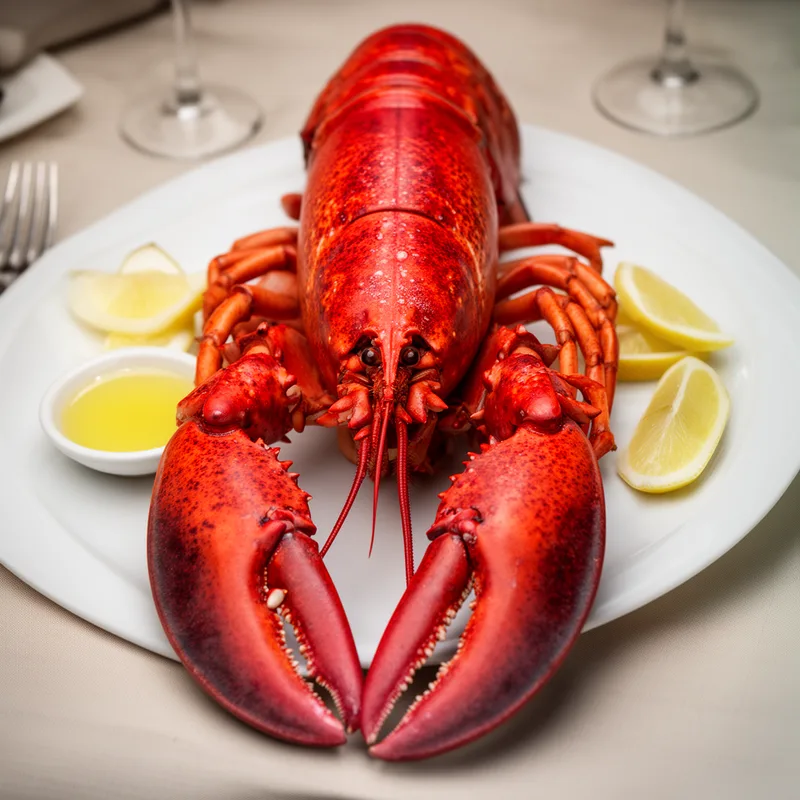
true lobster
- noun
- /tru ˈlɒbstər/
 :
langosta
:
langosta
- Unlike the spiny lobster, the true lobster has large, powerful claws.
Examples
-
The true lobster is highly prized for its sweet, tender meat.
-
Many restaurants serve true lobsters during the summer months.
-
Freshly caught true lobsters are often featured in fine dining restaurants.
-
The chef prepared a delicious true lobster for dinner.
-
Freshly caught true lobsters are often featured in fine dining restaurants.
-
The true lobster is highly prized for its sweet, tender meat.
-
Unlike the spiny lobster, the true lobster has large, powerful claws.
Synonyms
 157
1.0
157
1.0

A large sea animal with a hard shell and big claws that people eat
Surface Forms
Morphology
The phrase is transparently built from 'true' (genuine) + 'lobster' (sea-dwelling crustacean), so a learner who knows both words will understand it to mean a genuine/real lobster (as opposed to lookalikes). The finer taxonomic detail about Nephropidae and claws is specialist knowledge but does not prevent a B1 learner from deriving the basic intended meaning.
Etymology
True lobster may come from fishermen who used true to mean the 'real' lobster with big claws, to show it was different from other lobster-like sea animals. So, true lobster today refers to the large, clawed species people eat and value.