
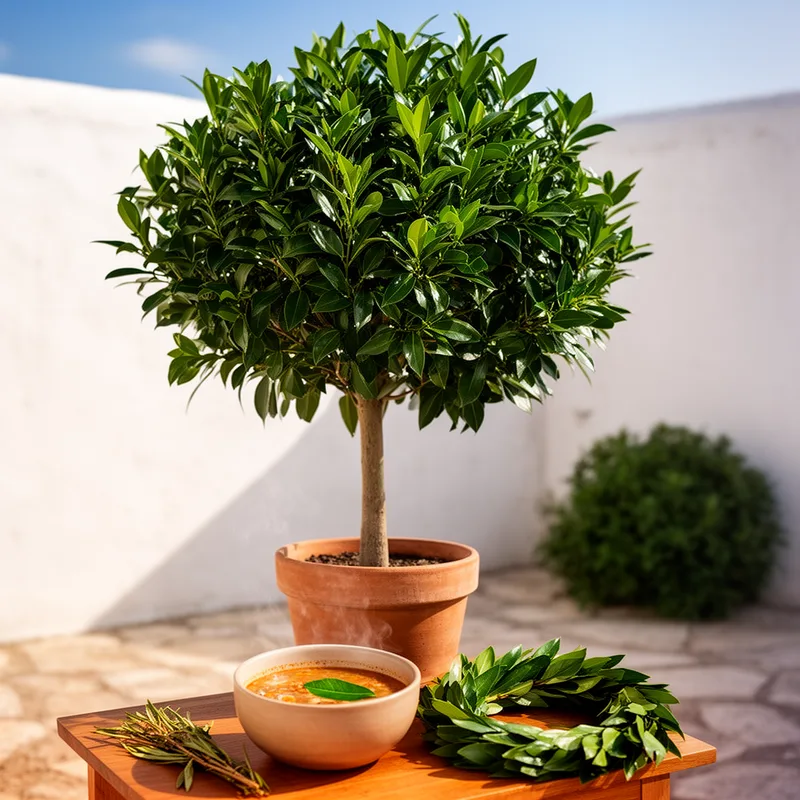
true laurel
- noun
- /tru ˈlɔːrəl/
- Fresh true laurel leaves are often used to flavor soups and stews in Mediterranean cuisine.
Examples
-
In ancient Greece, athletes were crowned with a wreath made from true laurel branches.
-
The garden boasts a mature true laurel tree, prized for both its beauty and culinary uses.
-
The chef added true laurel to the stew.
-
I bought some fresh true laurels from the market.
-
Fresh true laurel leaves are often used to flavor soups and stews in Mediterranean cuisine.
-
In ancient Greece, athletes were crowned with a wreath made from true laurel branches.
-
The garden boasts a mature true laurel tree, prized for both its beauty and culinary uses.
Synonyms
 13
5.3
13
5.3

A small evergreen tree with glossy leaves used to add flavour to food
 4
5.6
4
5.6
An evergreen tree or shrub with shiny leaves used in cooking and decoration
A small evergreen tree from the Mediterranean whose shiny leaves are used as bay leaves in cooking

A small evergreen tree with shiny leaves used to add flavor to food

A small evergreen tree with shiny scented leaves used in cooking and for making wreaths
Surface Forms
Morphology
The phrase combines 'true' (genuine) with 'laurel' (an evergreen plant), so its core meaning — the genuine/laurel plant — is directly derivable from the parts. A B1 learner who knows both words would understand this refers to the actual laurel species, though specific botanical or historical details (e.g., Mediterranean Laurus nobilis) are extra information.
Etymology
True laurel is a small evergreen tree whose shiny, scented leaves were used in cooking and whose branches were made into wreaths for 'victory' in ancient Greece. So, true laurel today means the real tree used to flavour food and as a sign of honour.