
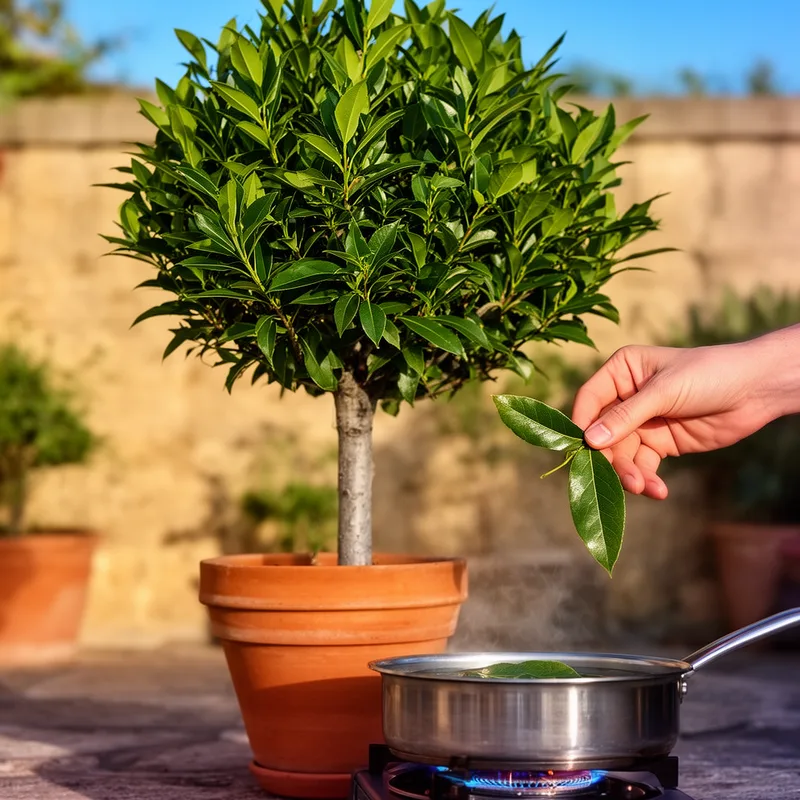
Laurus nobilis
- noun
- /ˈlɔːrəs ˈnoʊbɪlɪs/
- Specialized
- Many traditional Mediterranean dishes call for a Laurus nobilis leaf to enhance flavor.
Examples
-
In ancient times, victors were crowned with wreaths made from Laurus nobilis.
-
We planted a Laurus nobilis in our herb garden for its fragrant leaves.
-
The Laurus nobilis tree thrives in Mediterranean climates.
-
You can find Laurus nobilis in many Italian dishes.
-
In ancient times, victors were crowned with wreaths made from Laurus nobilis.
-
Many traditional Mediterranean dishes call for a Laurus nobilis leaf to enhance flavor.
-
We planted a Laurus nobilis in our herb garden for its fragrant leaves.
Synonyms
 13
5.3
13
5.3

A small evergreen tree with glossy leaves used to add flavour to food

A small evergreen tree with shiny leaves used to add flavor to food

A small evergreen tree with shiny scented leaves used in cooking and for making wreaths

A small evergreen tree from the Mediterranean with glossy fragrant leaves used to flavor food and for wreaths
Surface Forms
Morphology
Laurus + nobilis
The name is a Latin binomial composed of 'Laurus' (a genus of aromatic laurel trees) and 'nobilis' (noble), so a learner who knows both constituents can infer it denotes a particular laurel species — essentially a 'noble laurel' tree. However, the specific cultural and culinary senses (bay leaf use, ancient crowning) are specialized knowledge beyond literal composition, so the term is only partially predictable from its parts.
Etymology
Laurus nobilis was used by winners in ancient Greece to make leaf crowns, so the shiny, aromatic leaves became a simple symbol of 'victory'. Today those same leaves are used in cooking as the 'bay leaf', which is why this plant is both a kitchen herb and a sign of honour.