
troposphere
 8
7.4
8
7.4

- noun
- /ˈtroʊpəˌsfɪr/
- Specialized
- A 50 percent increase in ozone in the troposphere could lead to an increase in surface temperature of about 0.3 degrees C.
- the upper troposphere
- the lowest layer of the troposphere
- the top of the troposphere
Examples
-
The greenhouse effect is what destabilizes the troposphere (by cooling the upper layers) and enables convective overturning.
Blog text (18) -
A CFC release (for example, refrigerator venting) becomes well mixed throughout the troposphere in about one year.
Academic text (1998) -
Lifetime in the troposphere is typically pretty short hours to days.
-
The process is particularly efficient in the tropical troposphere.
Academic text (2012) -
The atmosphere contains from 4 percent water vapor in the troposphere to 40 percent near the surface.
Blog text (19) -
Ozone acts like a blanket in the lower troposphere, much like the other greenhouse gases do.
Blog text (28) -
Ground-based measurements have shown that CFC levels have stopped increasing and have slightly decreased in the troposphere.
Academic text (1998) -
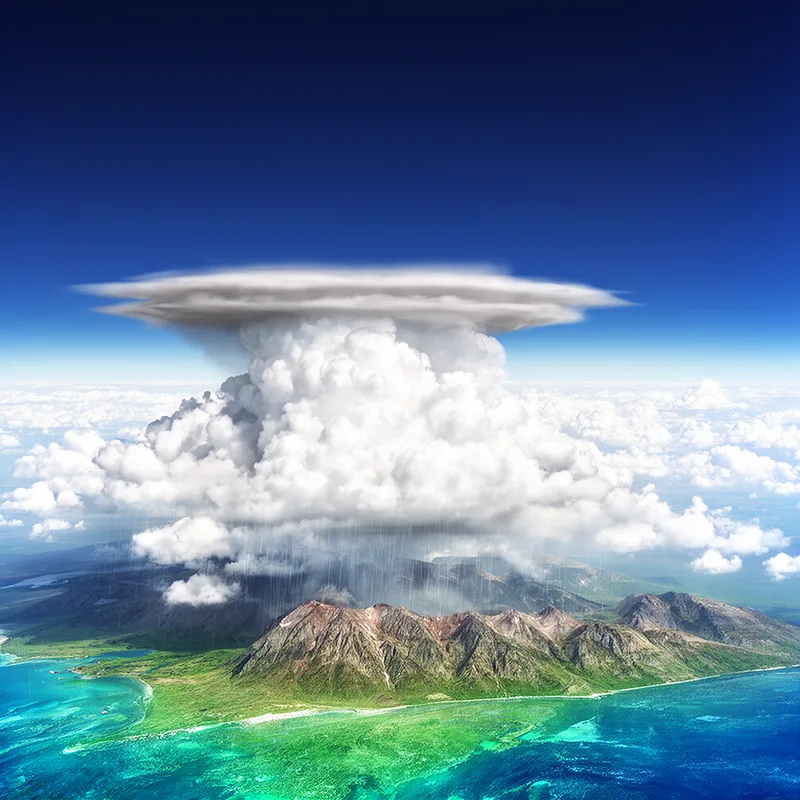
The weather is created in the troposphere, where clouds and rain form.
-
Temperatures in the troposphere decrease as altitude increases.
-
Airplanes typically fly in the troposphere during takeoff and landing.
How High
- Specialized
1
9.9

- Specialized
2
9.5
- Specialized
2
9.5
- Specialized
23
6.5
- Specialized
8
7.4
Surface Forms
Morphology
troposphere = sphere (semi-transparent) = tropo + sphere + tropo
The element 'sphere' clearly means a layer or region, but 'tropo-' is a specialized combining form meaning 'change' and is not obvious to average B1 learners.
Etymology
Troposphere comes from the Greek parts tropo- meaning 'turn' or 'change' and -sphere meaning 'ball' or 'layer around the Earth', so the name fits: it is the lowest layer of air where conditions keep changing and where most weather happens.