
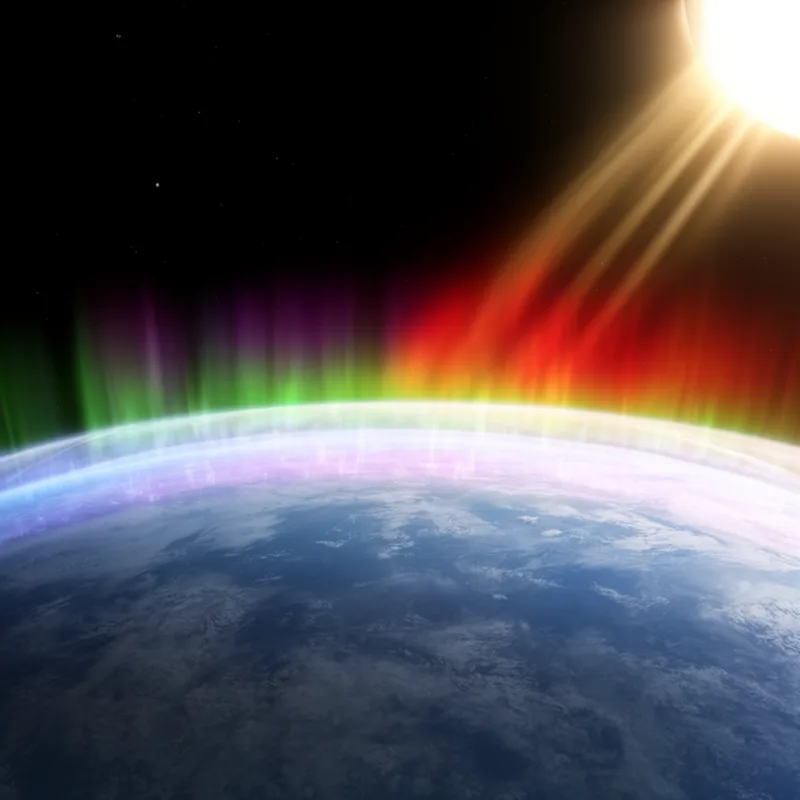
thermosphere
 2
9.5
2
9.5

- noun
- /ˈθɜrməˌsfɪr/
- Specialized
- The thermosphere is the highest layer of the Earth's atmosphere, located above the mesosphere.
Examples
-
That puts it in what's known as the thermosphere, a layer of the Earth's atmosphere which is incredibly under dense.
-
Above the mesosphere is the thermosphere.
Blog text (2) -
Aurorae are in the lower part of the thermosphere, and the ISS is in the middle of the thermosphere.
Blog text (2) -
At altitudes above about 100 km, the absorption of solar photons by both molecular and atomic oxygen and by molecular nitrogen heats the entire thermosphere.
Academic text (2006) -
Temperatures in the thermosphere can reach up to 2,500 degrees Celsius due to solar radiation.
-
Satellites orbit within the thermosphere, where they experience fewer atmospheric drag effects.
How High
- Specialized
1
9.9

- Specialized
2
9.5
- Specialized
2
9.5
- Specialized
23
6.5
- Specialized
8
7.4
Surface Forms
Morphology
Etymology
The word thermosphere combines thermo- meaning 'heat' and -sphere meaning 'globe' or 'ball'. So the thermosphere is the high layer of air around Earth that becomes very hot, which is why its name means a 'heat globe'.