
trimerization
- noun
- /ˌtraɪməraɪˈzeɪʃən/
- Specialized
- The trimerization process occurs rapidly in certain conditions.
Examples
-
Researchers observed trimerization during the synthesis of new aromatic compounds in the laboratory.
-
The trimerization of the compound produced a stable ring structure used in advanced materials.
-
Understanding trimerization is important for designing efficient chemical reactions in organic chemistry.
-
Scientists study trimerization to understand polymer formation.
-
The researchers studied the mechanisms behind the trimerization of proteins in response to stress.
-
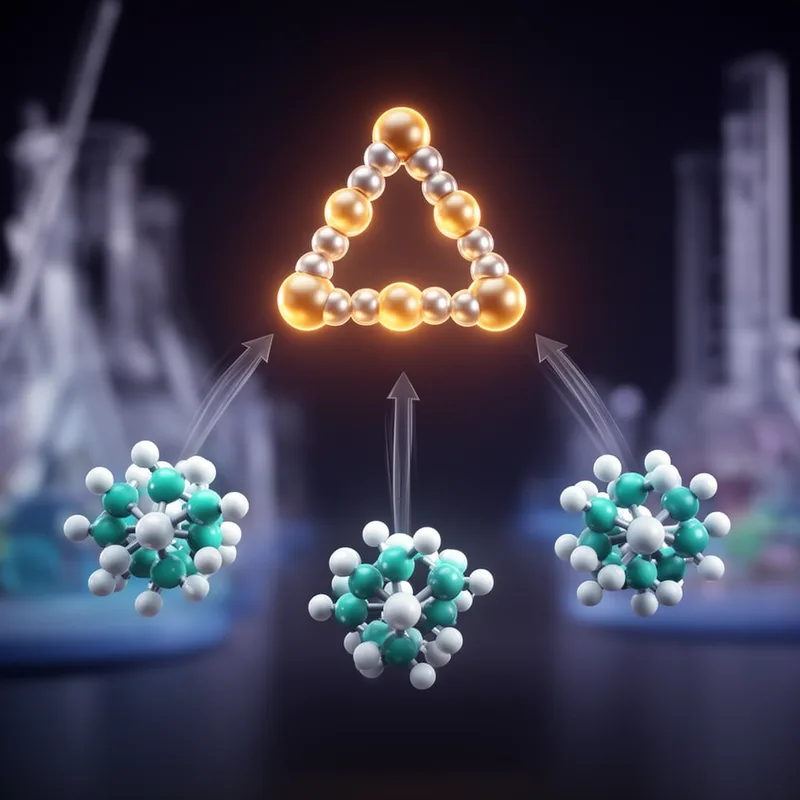
During the experiment, the scientists observed the trimerization of three identical molecules forming a stable complex.
-
The process of trimerization is crucial for understanding how certain enzymes behave in biochemical reactions.
How Many
- Specialized
 1
8.6
1
8.6


- Specialized
- Specialized
- Specialized
Surface Forms
Morphology
trimerization = trimer (semi-transparent) = tri + mer + ization
The word is formed regularly from the technical base 'trimer' plus '-ization', but the base itself is specialized and may not be familiar to many learners.
Etymology
The word trimerization breaks into tri- 'three' and mer 'part', the same mer you see in polymer. So it means the process of three parts or molecules joining together to form one three-part unit.