
trichloroethane


 1
9.9
1
9.9
- noun
- /ˌtraɪˌklɔːroʊˈiːθeɪn/
- Specialized
- Unfortunately, the sewage sludge contained lead, trichloroethane, trichloroethylene, chloroform, and other hazardous substances, presumably in violation of the permit.
- 1,1,1-trichloroethane
Examples
-
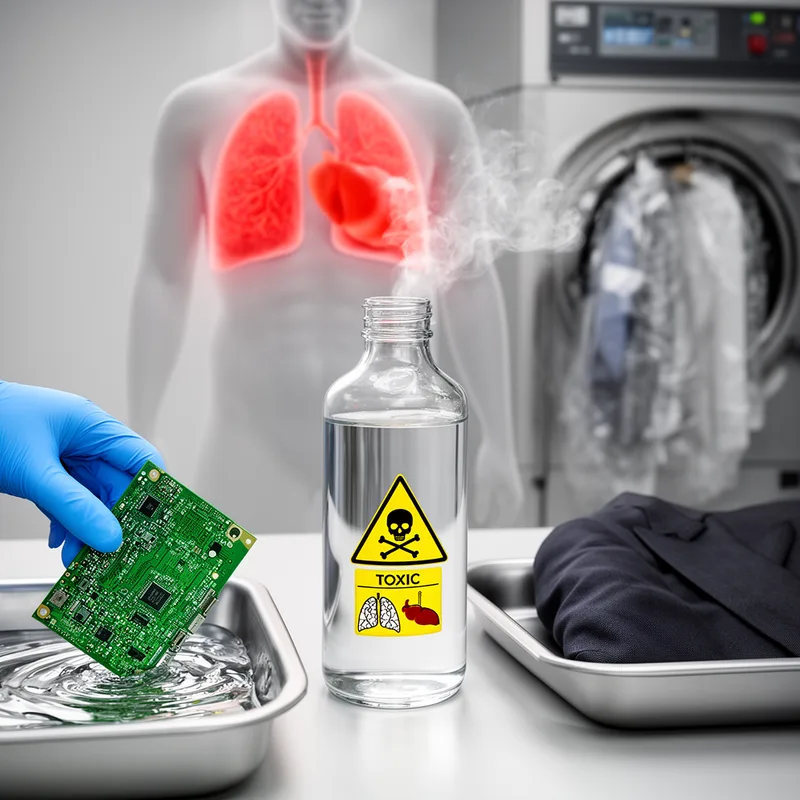
During the dry cleaning process, trichloroethane is commonly utilized to remove stubborn stains.
-
Subregistries were established for dioxin in 1988, TCE in 1989, benzene in 1991, and trichloroethane (TCA) in 1992.
Academic text (2010) -
Trichloroethane just doesn't have the appeal for me that it used to have.
-
And the remainder is trichloroethane and a methacrylate monomer.
-
Traces of 1,1,1-trichloroethane, CAS 71-55-6, a non-carcinogen, were also detected.
Academic text (1994) -
We've got carbon tetrachloride, trichloroethylene, 1,1,2-trichloroethane, 1,1-dichloroethane, boron, PCBs?
Fiction book (1999) -
Trichloroethane is often used as a solvent for cleaning electronic components due to its effectiveness.
-
The toxic effects of trichloroethane on the liver and lungs have raised concerns among health officials.
How Toxic
- Specialized
1
9.9

- Specialized
1
9.9
- Archaic
- Specialized
1
8.5
- Specialized
66
4.1
Surface Forms
Morphology
Etymology
Trichloroethane breaks into tri- 'three', chloro- from 'chlorine', and ethane, which is the name for a very simple two-carbon compound. So the name literally says it is an ethane molecule with three chlorine atoms attached, which helps explain why it is heavy, a strong solvent, and can be dangerous to health.