
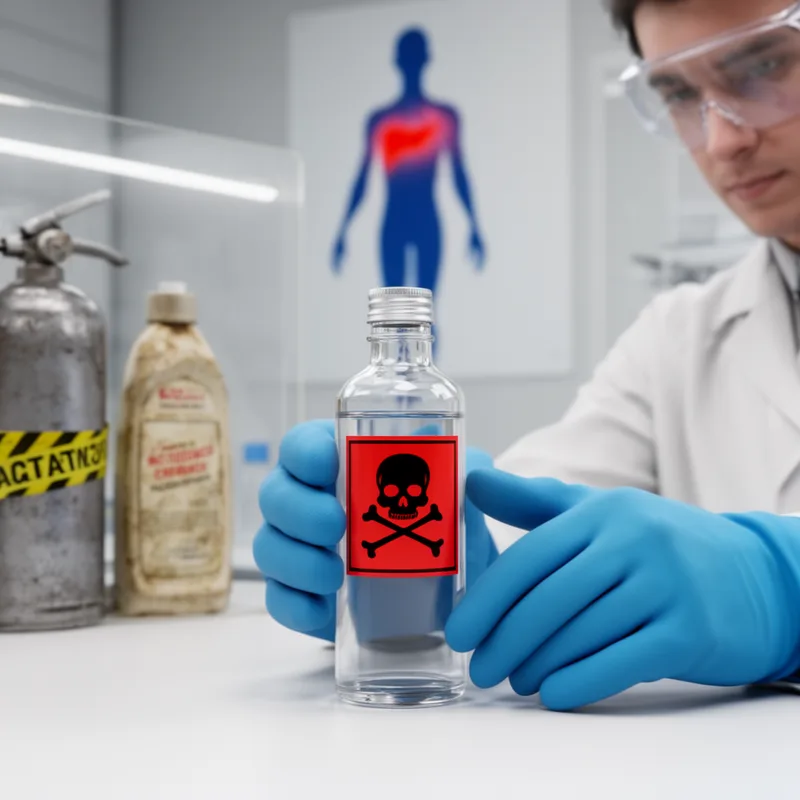
carbon tetrachloride
- noun
- /ˈkɑrbən ˌtɛtrəˈklɔrˌaɪd/
- Archaic
- Workers handling carbon tetrachloride must wear protective gear to avoid health risks from exposure.
Examples
-
"I bet the wages are lower, too." "I'm investigating a pharmaceutical company that's using underground storage tanks that have leaked pure carbon tetrachloride into the groundwater."
Fiction book (1999) -
In the 1990s, continued international agreements with complementary domestic regulations dealing with other ozone-depleting substances such as methyl chloroform and carbon tetrachloride must be pursued.
Academic text (1992) -
We've got carbon tetrachloride, trichloroethylene, 1,1,2-trichloroethane, 1,1-dichloroethane, boron, PCBs?
Fiction book (1999) -
The use of carbon tetrachloride as a solvent has been largely discontinued due to its toxic nature.
-
In some industrial applications, carbon tetrachloride was once commonly used but is now considered hazardous.
Synonyms

A clear liquid once used to clean things that is now used less because it is poisonous

A colorless liquid once used to clean things that is poisonous and now rarely used
How Toxic
- Specialized


 1
9.9
1
9.9

- Specialized
1
9.9
- Archaic
- Specialized
1
8.5
- Specialized
66
4.1
Surface Forms
Morphology
The compound name denotes literally a carbon atom(s) bound to four chlorine atoms: if a learner knows 'carbon' and 'tetrachloride' (a compound with four chlorines) they can infer the substance is carbon with four chlorines (CCl4). While specific properties like toxicity or historical uses are not predictable from the parts, the referent identity follows regular chemical naming patterns found across languages and is therefore immediately comprehensible from the constituents.
Etymology
The noun carbon tetrachloride names its parts: carbon and tetrachloride, which means one carbon atom with four chlorine atoms. Because that molecule is a clear, harmful liquid once used for cleaning and in fire extinguishers, the name now refers to that 'toxic' liquid.