

tribromoethyl alcohol
- noun
- /ˌtraɪˈbroʊmoʊˌiːθəl ˈæl.kə.hɔl/
- Archaic
- In past decades, tribromoethyl alcohol was a commonly used intravenous anesthetic in surgeries.
Examples
-
Because of safety concerns, tribromoethyl alcohol was replaced by newer anesthetic agents.
-
The use of tribromoethyl alcohol as an anesthetic has declined due to its side effects.
-
Researchers studied the effects of tribromoethyl alcohol in laboratory animals.
-
The doctor administered tribromoethyl alcohol for the procedure.
-
Many hospitals have stopped using tribromoethyl alcohol due to safety concerns.
-
Due to its side effects, tribromoethyl alcohol is no longer a preferred choice for anesthesia.
-
The medical team decided against using tribromoethyl alcohol after reviewing its safety profile.
Synonyms
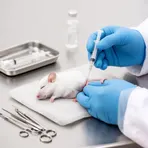
A drug scientists give into a vein to make lab animals sleep for short procedures
Surface Forms
Morphology
tribromoethyl + alcohol
The form is compositionally built (tribromoethyl = tri- + bromo + ethyl) + alcohol, so someone with chemical morphological knowledge can infer it denotes a specific substituted alcohol molecule. However the precise identity and the clinical use as an intravenous anesthetic are specialised facts not recoverable from the parts, and the technical morphemes are unlikely to be known by an average B1 learner, so the transparency is partial.
Etymology
Tribromoethyl alcohol breaks into parts: tri- meaning 'three', bromo meaning 'bromine' (a kind of chemical), and ethyl alcohol meaning a small 'alcohol' group. Because the molecule had three heavy bromine atoms, it was once given into a vein to make patients sleep during operations, so the name tells both its structure and its past use.

