
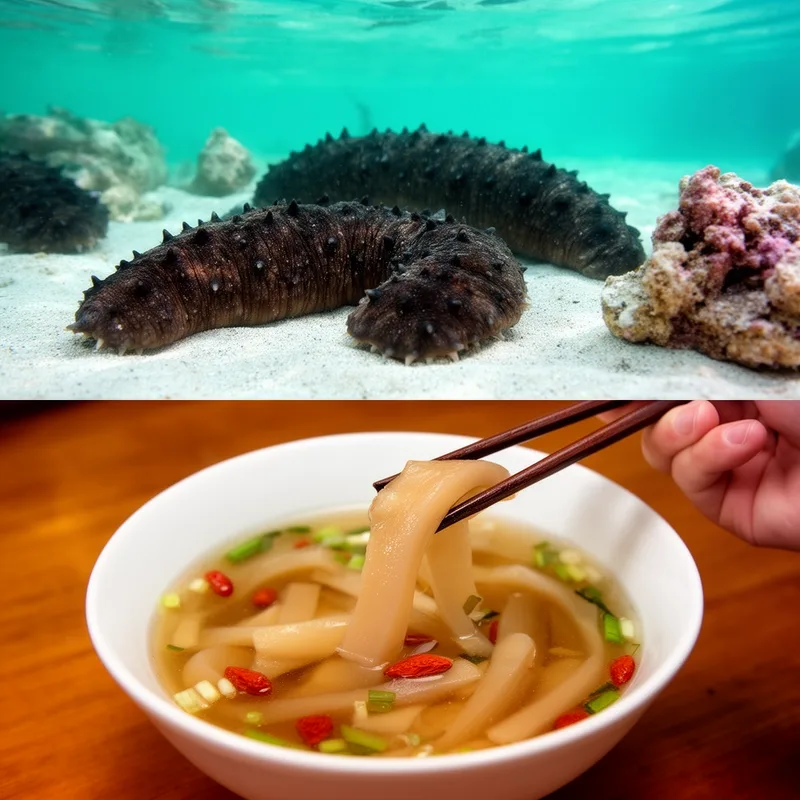
trepang


 1
9.9
- noun
- /trɪˈpæŋ/
- The Macassans didn't come to Australia to colonize or trade, but to find trepang, also known as sea cucumbers or bêche-de-mer.
Examples
-
In East Asia, trepang is commonly served as a delicacy in upscale restaurants.
-
At the northern end of the Lamilami clan estate is Anuru Bay, where fleets of Macassan praus visited each year to catch and process trepang.
Academic text (2011) -
Dutch trade records show a spike in the trepang trade around 1780.
Academic text (2011) -
"Trepang was the first thing anyone found in Australia to make money on the global market," says Campbell Macknight, a visiting fellow at Australian National.
Academic text (2011) -
For this assistance, the Yapese traded copra and trepang, or sea cucumbers, which O'Keefe sold in the Far East, amassing a fortune in the process.
Academic text (2004) -
Many coastal communities gather trepang during low tides for their local markets.
-
Cooks often prepare trepang by drying it and adding it to soups and stir-fries.
Synonyms
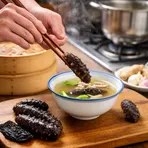
A sea cucumber eaten as food in parts of Asia and Australia
Surface Forms
Etymology
Trepang comes from the Malay word teripang, which means 'sea cucumber'. Traders and sailors used teripang for the dried animal sent to China and other markets, so today trepang still names the edible 'sea cucumber' found in warm coastal waters.