

transversus abdominis muscle
- noun
- /trænˈvɜrsəs æbˈdɑːmɪnɪs ˈmʌsəl/
- Specialized
- Strengthening the transversus abdominis muscle can help improve core stability and reduce lower back pain.
Examples
-
The transversus abdominis muscle is activated during deep abdominal breathing exercises.
-
Many athletes strengthen their transversus abdominis muscles to improve performance.
-
Injury to the transversus abdominis muscle can compromise the strength of the abdominal wall.
-
The transversus abdominis muscle is crucial for core stability.
-
Strengthening the transversus abdominis muscle can help improve core stability and reduce lower back pain.
-
Injury to the transversus abdominis muscle can compromise the strength of the abdominal wall.
-
The transversus abdominis muscle is activated during deep abdominal breathing exercises.
Synonyms
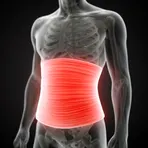
A flat muscle with fibers that run across the belly to make the front and side walls

A flat muscle that runs across the front and side of the abdomen and helps keep the body stable

A deep flat muscle in the belly wall that helps keep organs in place and support the body
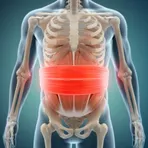
A muscle that runs across the front of the abdomen to support the core
Surface Forms
Morphology
transversus + abdominis + muscle
The compound is fully compositional: 'transversus' means oriented transversely, 'abdominis' indicates 'of the abdomen' (a regular Latin genitive related to 'abdomen/abdominal'), and 'muscle' is literal. A learner who knows these constituent meanings can readily infer 'a muscle running transversely across the abdomen', and similar morphology exists cross-linguistically, supporting transparency.
Etymology
Transversus abdominis muscle gets its name from Latin: transversus means 'across' and abdominis means 'of the belly', so the name literally says 'the muscle that runs across the belly'. So, because it lies across the belly and tightens the abdomen, it helps 'support the core' and keep the lower back stable.

