
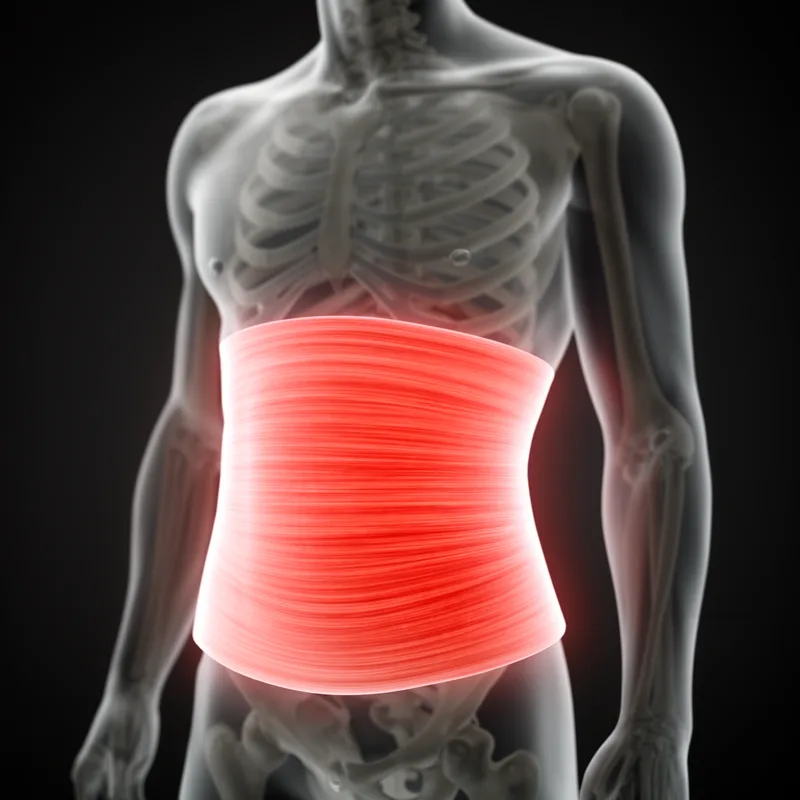
transversus abdominis
- noun
- /trænˈvɜrsəs æbˈdɑːmɪnɪs/
- Specialized
- Strengthening the transversus abdominis can help improve core stability and reduce back pain.
Examples
-
The transversus abdominis is engaged during many Pilates exercises for better support of the spine.
-
During deep breathing, the transversus abdominis contracts to help compress the abdominal contents.
-
The transversus abdominis is crucial for core stability.
-
You should strengthen your transversus abdominis to improve posture.
-
During deep breathing, the transversus abdominis contracts to help compress the abdominal contents.
-
Strengthening the transversus abdominis can help improve core stability and reduce back pain.
-
The transversus abdominis is engaged during many Pilates exercises for better support of the spine.
Synonyms

A flat muscle that runs across the front and side of the abdomen and helps keep the body stable

A deep flat muscle in the belly wall that helps keep organs in place and support the body
A flat deep stomach muscle that helps keep the middle of the body stable
A muscle that runs across the front of the abdomen to support the core
Surface Forms
Morphology
transversus + abdominis
The term is a compositional anatomical name: 'transversus' means oriented transversely and 'abdominis' denotes the abdomen, so together they indicate a transverse muscle of the abdominal wall. Anatomical naming follows predictable compounding patterns (and many languages use the same logic), so a learner who knows the constituent meanings can infer the MWE's sense.
Etymology
Transversus abdominis comes from Latin words: transversus meaning 'across' and abdominis meaning 'of the abdomen'. The name fits the muscle's image — a flat band that runs like a belt across the front and sides of the belly, so it squeezes the inside organs and helps 'support the spine' and keep the body stable.

