

transcutaneous
- adjective
- /ˌtrænzkjʊˈteɪniəs/
- Specialized
- Many patients find that transcutaneous treatments help alleviate their symptoms without the need for injections.
- transcutaneous stimulation
- transcutaneous electrical
- transcutaneous electrical nerve
Examples
-
Combined stimulation of nasal muscles through both transcutaneous and intranasal electrodes helps, we feel, to achieve a more even distribution of electric current in nasal tissues.
Academic text (2004) -
Treatment consisted of high-frequency transcutaneous and intranasal electric stimulation of nasal muscles for 15 minutes, three times a week for 10 weeks.
Academic text (2004) -
Externally applied heat (44 infinity C) emanating from the electrode was used in transcutaneous monitoring to produce an increase in cutaneous blood flow.
Academic text (1999) -
Electrodes for transcutaneous stimulation were attached above the nasal muscles, with the intranasal electrode gently inserted into a nostril (Figure 4).
Academic text (2004) -
The purpose of this study was to investigate the outcome of transcutaneous and intranasal electric stimulation of nasal muscles in cases of nasal valve stenosis and/or collapse.
Academic text (2004) -
These include the exploration of the peripheral and central mechanisms of pain, neurological pathways to pain, non-pharmacological approaches to its management, such as thermotherapy, transcutaneous electrical stimulation, aids and devices, and pharmacological approaches to pain management including disease #.
Academic text (2015) -
The doctor recommended using a transcutaneous patch to deliver medication effectively through the skin.
-
The research focused on the benefits of transcutaneous administration of pain relief therapies in chronic conditions.
Synonyms
 1
8.4
1
8.4

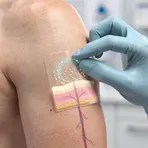
A medical procedure or product that goes through the skin without making a cut
 1
6.1
1
6.1
Delivers medicine through unbroken skin, often as a cream or patch
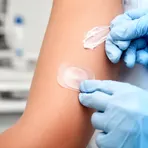
Delivered through unbroken skin by a cream or patch so medicine enters the body
How Cutaneous
- Specialized

- Specialized
11
4.1
Surface Forms
Morphology
Etymology
Transcutaneous comes from the parts trans- meaning 'across', as in transport, and cutaneous meaning 'skin', like cuticle. So it literally means 'across the skin', which is why a transcutaneous treatment is given through the skin rather than inside the body.