
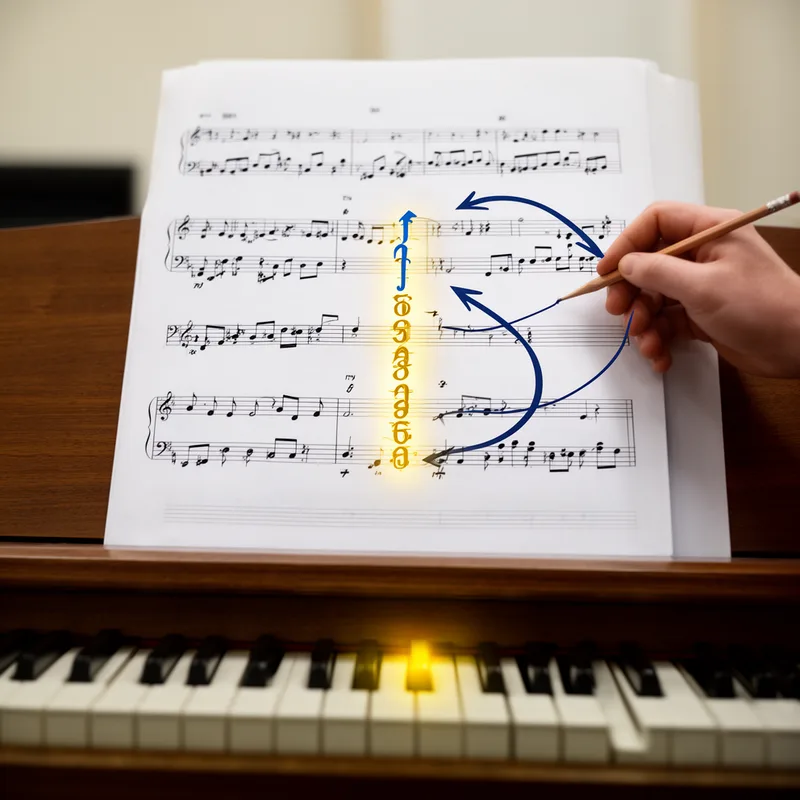
tonic key
- noun
- /ˈtɒnɪk kiː/
- Specialized
- The symphony was written in the key of G major, making G its tonic key.
Examples
-
During the sonata, the music repeatedly returns to the tonic key after exploring others.
-
Musicians must first determine the tonic key to understand the structure of the composition.
-
The piece is in the tonic key of C major.
-
What is the tonic key for this composition?
-
The piece starts in C major, establishing the tonic key before exploring other harmonies.
-
Composers often return to the tonic key to create a sense of resolution in their music.
-
A strong melody is often built around the tonic key, making it the focal point of the composition.
Synonyms

 38
6.0
38
6.0

A set of notes that forms the main sound of a song
 1
8.0
1
8.0
The first and main note of a musical scale

The main set of notes a piece of music returns to
Surface Forms
Morphology
The meaning is directly derivable from the constituents: 'tonic' (the home note) and 'key' (the tonality/home pitch centre) both point to the tonal centre, so 'tonic key' simply denotes the principal key of a piece. Although musical terminology is somewhat technical, the composition of the two meanings is transparent and predictable, so a learner who knows both words can infer the MWE's meaning.
Etymology
Tonic key paints a simple picture: the tonic is the 'home' note of a piece and the key is like its musical house, so the music keeps coming back there. That's why tonic key means the main key or musical center of the piece.