

tineoid moth
- noun
- /ˈtaɪniˌɔɪd mɔθ/
- Specialized
- Unlike most butterflies, a tineoid moth has chewing mouthparts instead of a proboscis.
Examples
-
The scientist examined the tineoid moth under a microscope to study its unusual mouthparts.
-
Several tineoid moths were attracted to the light in the laboratory overnight.
-
Look! A tineoid moth!
-
The tineoid moth is often found in dark corners.
-
Several tineoid moths were attracted to the light in the laboratory overnight.
-
The scientist examined the tineoid moth under a microscope to study its unusual mouthparts.
-
Unlike most butterflies, a tineoid moth has chewing mouthparts instead of a proboscis.
Synonyms

 71
1.0
71
1.0

An insect like a butterfly that flies at night, often with feathery antennae

A small dull brown moth that eats cloth and wool
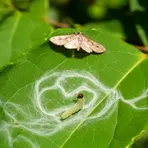
A small moth whose caterpillars make winding tunnels inside leaves
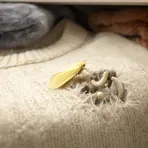
A small yellowish moth whose caterpillars eat wool, fur and other animal fibers
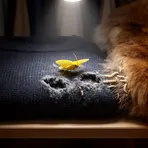
A small yellow moth whose caterpillars eat wool, fur, and other animal products
Surface Forms
Morphology
The phrase denotes a subtype: a moth that is tineoid, so the meaning is directly built from 'tineoid' (a small/dull-colored moth-type descriptor) + 'moth' (the insect). This head-modifier, subtype-naming pattern is fully compositional and cross-linguistically common, so a B1 learner who knows both constituents would readily understand it.
Etymology
The name tineoid moth may come from the old word tinea, used for tiny moths that 'eat cloth', so imagine a small, dull moth nibbling a sweater. That's why tineoid moth now refers to small, plain-colored moths that often have chewing mouths instead of a long straw-like mouth.