
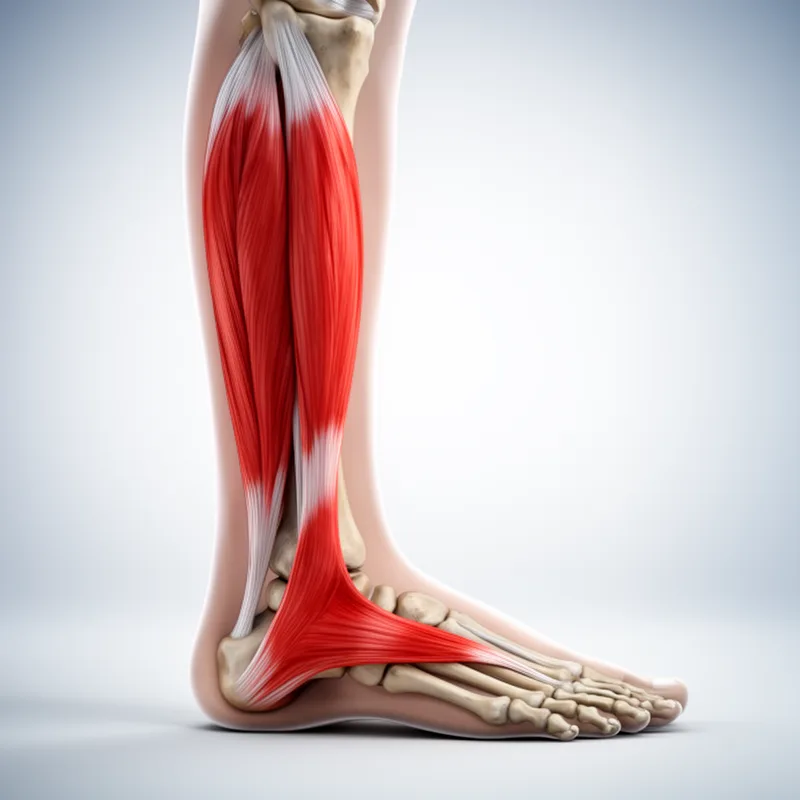
tibialis posterior
- noun
- /ˌtɪbiˈælɪs pəˈstɪr/
- Specialized
- The tibialis posterior plays a crucial role in supporting the arch of the foot.
Examples
-
Injuries to the tibialis posterior can cause pain and instability in the ankle.
-
Physical therapy may help strengthen a weakened tibialis posterior muscle.
-
The tibialis posterior is crucial for maintaining the arch of the foot.
-
A strong tibialis posterior helps prevent flat feet.
-
The tibialis posterior plays a crucial role in supporting the arch of the foot.
-
Physical therapy may help strengthen a weakened tibialis posterior muscle.
-
Injuries to the tibialis posterior can cause pain and instability in the ankle.
Synonyms
A deep muscle at the back of the lower leg that supports the foot arch and moves the ankle
Surface Forms
Morphology
The term is transparently compositional: 'tibialis' denotes a muscle involved in foot movement and 'posterior' indicates its rear/behind location, so together they denote the posterior muscle of the lower leg that supports the arch. This follows standard anatomical naming conventions (common across languages) and would be inferable by a B1 learner who knows both constituent meanings.
Etymology
Tibialis posterior comes from old Latin: tibialis means 'of the shin' and posterior means 'back'. This gives a clear image of a muscle sitting behind the shin that helps move the foot and support the arch.

